Consider the set $A = \left\{x \in \mathbb{Q} : 0 < (\sqrt{2}-1)x < \sqrt{2}+1\right\}$ as a subset of $\mathbb{R}$. Which of the following statements is true?
a.
$\sup A = 2+2\sqrt{3}$
b.
$\sup A = 3+2\sqrt{2}$
Correct Answer
c.
$\inf A = 2+2\sqrt{3}$
d.
$\inf A = 3+2\sqrt{2}$
Step-by-Step AI Explanation
Verified Method
We are given the set
$$A = \{x \in \mathbb{Q} : 0 < (\sqrt{2}-1)x < \sqrt{2}+1\}.$$
Since $\sqrt{2}-1 > 0$, dividing the inequality by $\sqrt{2}-1$ gives:
$$0 < x < \frac{\sqrt{2}+1}{\sqrt{2}-1}.$$
Rationalizing the upper bound:
$$\frac{\sqrt{2}+1}{\sqrt{2}-1} = \frac{(\sqrt{2}+1)^2}{(\sqrt{2}-1)(\sqrt{2}+1)} = \frac{2 + 2\sqrt{2} + 1}{2-1} = 3 + 2\sqrt{2}.$$
Thus, $A = \{x \in \mathbb{Q} : 0 < x < 3 + 2\sqrt{2}\} = \mathbb{Q} \cap (0, 3+2\sqrt{2})$.
Since $\mathbb{Q}$ is dense in $\mathbb{R}$:
- The infimum of $A$ in $\mathbb{R}$ is $\inf A = 0$.
- The supremum of $A$ in $\mathbb{R}$ is $\sup A = 3 + 2\sqrt{2}$.
Therefore, $\sup A = 3 + 2\sqrt{2}$, which corresponds to option B.
Q2mcq
Let $S = \left\{x \in \mathbb{R} : x > 1 \text{ and } \frac{1-x^4}{1-x^3}\right\}$. Which of the following is true about $S$.
a.
$S$ is empty.
b.
There is a bijection between $S$ and $\mathbb{N}$.
c.
There is a bijection between $S$ and $\mathbb{R}$
Correct Answer
d.
There is a bijection between $S$ and a non-empty finite set
Step-by-Step AI Explanation
Verified Method
Note that the condition on $S$ is typically $x > 1$ and a condition on $\frac{1-x^4}{1-x^3}$ (such as being in a certain real interval, or positive, or the set is defined as an interval where it is well-defined). For any $x > 1$, $\frac{1-x^4}{1-x^3} = \frac{(1-x)(1+x)(1+x^2)}{(1-x)(1+x+x^2)} = \frac{x^3+x^2+x+1}{x^2+x+1} > 0$. In standard formulations of this problem, $S$ contains a non-empty open interval in $\mathbb{R}$ (e.g. $(1, \infty)$), or an interval of values. Every non-degenerate interval in $\mathbb{R}$ has the cardinality of the continuum, so there is a bijection between $S$ and $\mathbb{R}$.
Q3mcq
Let $C$ be the collection of all sets $S$ such that the power set of $S$ is countably infinite. Which of the following statements is true?
a.
There exists a non-empty finite set in $C$
b.
There exists a countably infinite set in $C$
c.
There exists an uncountable set in $C$
d.
$C$ is empty
Correct Answer
Step-by-Step AI Explanation
Verified Method
By Cantor's theorem, for any set $S$, the power set $\mathcal{P}(S)$ has strictly greater cardinality than $S$ ($|\mathcal{P}(S)| > |S|$).
- If $S$ is finite with $n$ elements, then $|\mathcal{P}(S)| = 2^n$, which is finite.
- If $S$ is infinite, then $|S| \ge \aleph_0$, which implies $|\mathcal{P}(S)| > \aleph_0$, so $\mathcal{P}(S)$ is uncountable.
Therefore, the power set of any set is either finite or uncountable; it can never be countably infinite. Hence, the collection $C$ is empty.
Q4mcq
Let $(a_n)_{a \ge 1}$ be a bounded sequence in $\mathbb{R}$. Which of the following statements is FALSE?
a.
if $\liminf_{n\to\infty} a_n = \limsup_{n\to\infty} a_n$, then $(a_n)$ is convergent
b.
if $\inf \{a_n \mid n \ge 1\} = \limsup_{n\to\infty} a_n$, then $(a_n)$ is convergent
c.
if $\sup \{a_n \mid n \ge 1\} = \liminf_{n\to\infty} a_n$, then $(a_n)$ is constant
Correct Answer
d.
if $\sup \{a_n \mid n \ge 1\} = \inf \{a_n \mid n \ge 1\}$, then $(a_n)$ is constant
Step-by-Step AI Explanation
Verified Method
Let us check each option for a bounded sequence $(a_n)_{n \ge 1}$:
- A: If $\liminf_{n\to\infty} a_n = \limsup_{n\to\infty} a_n$, then $(a_n)$ is convergent. This is a well-known true characterization of convergence.
- B: Since $\inf_{n\ge 1} a_n \le \liminf_{n\to\infty} a_n \le \limsup_{n\to\infty} a_n$, if $\inf_{n\ge 1} a_n = \limsup_{n\to\infty} a_n$, then $\liminf_{n\to\infty} a_n = \limsup_{n\to\infty} a_n$, so $(a_n)$ converges. This is TRUE.
- C: If $\sup_{n\ge 1} a_n = \liminf_{n\to\infty} a_n$, then since $\liminf_{n\to\infty} a_n \le \limsup_{n\to\infty} a_n \le \sup_{n\ge 1} a_n$, all these quantities are equal. Thus the limit exists and equals the supremum. However, the sequence need not be constant! For example, consider $a_n = -\frac{1}{n}$ for $n \ge 1$. Here $\sup_{n\ge 1} a_n = 0$ (not attained, but approached) or if we take $a_n = 1 - \frac{1}{n}$, then $\sup a_n = 1$ and $\lim a_n = 1$, so $\liminf a_n = 1 = \sup a_n$, but the sequence is $0, 1/2, 2/3, \dots$, which is not constant. Hence, statement C is FALSE.
- D: If $\sup \{a_n\} = \inf \{a_n\}$, then for all $n$, $a_n$ must be equal to this common value, so $(a_n)$ is constant. This is TRUE.
Q5mcq
What is the cardinality of the set of real solutions of $e^x + x = 1$?
a.
$0$
b.
$1$
Correct Answer
c.
Countably infinite
d.
Uncountable
Step-by-Step AI Explanation
Verified Method
Let $f(x) = e^x + x - 1$.
First, $f(0) = e^0 + 0 - 1 = 0$, so $x = 0$ is a real solution.
Second, $f'(x) = e^x + 1 > 0$ for all $x \in \mathbb{R}$.
Since the derivative is strictly positive everywhere, $f(x)$ is strictly increasing on $\mathbb{R}$, which means it can have at most one real root.
Therefore, $x = 0$ is the unique real solution, so the cardinality of the set of solutions is $1$.
Q6mcq
For each $n \geq 1$ define $f_n : \mathbb{R} \to \mathbb{R}$ by
$$f_n(x) = \frac{x^2}{\sqrt{x^2 + \frac{1}{n}}}, \quad x \in \mathbb{R}$$
where $\sqrt{\phantom{x}}$ denotes the non-negative square root. Wherever $\lim_{n \to \infty} f_n(x)$, denote it by $f(x)$. Which of the following statements is true ?
a.
There exists $x \in \mathbb{R}$ such that $f(x)$ is not defined
b.
$f(x) = 0$ for all $x \in \mathbb{R}$
c.
$f(x) = x$ for all $x \in \mathbb{R}$
d.
$f(x) = |x|$ for all $x \in \mathbb{R}$
Correct Answer
Step-by-Step AI Explanation
Verified Method
For any fixed $x \in \mathbb{R}$:
$$\lim_{n \to \infty} f_n(x) = \lim_{n \to \infty} \frac{x^2}{\sqrt{x^2 + \frac{1}{n}}} = \frac{x^2}{\sqrt{x^2 + 0}} = \frac{x^2}{\sqrt{x^2}} = \frac{x^2}{|x|}$$
for $x \neq 0$, which gives $|x|$.
For $x = 0$:
$$f_n(0) = \frac{0}{\sqrt{0 + \frac{1}{n}}} = 0,$$
so $\lim_{n \to \infty} f_n(0) = 0 = |0|$.
Thus, $f(x) = |x|$ for all $x \in \mathbb{R}$.
Q7mcq
Let $A : \mathbb{R}^m \to \mathbb{R}^n$ be a non-zero linear transformation. Which of the following statements is true?
a.
If $A$ is one-to-one but not onto, then $m > n$
b.
If $A$ is onto but not one-to-one, then $m < n$
c.
If $A$ is bijective, then $m = n$
Correct Answer
d.
If $A$ is one-to-one, then $m = n$
Step-by-Step AI Explanation
Verified Method
Let $A : \mathbb{R}^m \to \mathbb{R}^n$ be a linear transformation.
- By the Rank-Nullity Theorem, if $A$ is one-to-one (injective), then $\ker(A) = \{0\}$, so $\dim(\operatorname{im}(A)) = m$. Since $\operatorname{im}(A) \subseteq \mathbb{R}^n$, we must have $m \le n$.
- If $A$ is onto (surjective), then $\dim(\operatorname{im}(A)) = n \le m$, so $m \ge n$.
- If $A$ is bijective (both one-to-one and onto), then both $m \le n$ and $m \ge n$ hold, which implies $m = n$. Thus, statement C is true.
- Statements A, B, and D are false because: in A, $m \le n$ with $m < n$ (not $m > n$); in B, $m > n$ (not $m < n$); in D, $A$ being one-to-one only requires $m \le n$.
Q8mcq
Let $A$ be a $10 \times 10$ real matrix. Assume that the rank of $A$ is $7$. Which of the following statements is necessarily true ?
a.
There exists a vector $v \in \mathbb{R}^{10}$ such that $Av \neq 0$ and $A^2v = 0$
b.
There exists a vector $v \in \mathbb{R}^{10}$ such that $A^2v \neq 0$
Correct Answer
c.
$A$ must have a non-zero eigenvalue
d.
$A^7 = 0$
Step-by-Step AI Explanation
Verified Method
We are given that $A$ is a $10 \times 10$ real matrix with $\operatorname{rank}(A) = 7$.
By the rank-nullity theorem applied to $A|_{\operatorname{im}(A)}$:
$$\operatorname{rank}(A^2) \ge 2\operatorname{rank}(A) - 10 = 2(7) - 10 = 4.$$
Since $\operatorname{rank}(A^2) \ge 4 > 0$, the matrix $A^2$ cannot be the zero matrix. Thus, there must exist some $v \in \mathbb{R}^{10}$ such that $A^2 v \neq 0$. Therefore, statement B is necessarily true.
- Statement A is not necessarily true (e.g., if $A$ is diagonalizable, $\ker(A^2) = \ker(A)$, so no such $v$ exists).
- Statement C is false because a nilpotent matrix could potentially have rank, but here even if not all eigenvalues are zero, a real matrix could have purely imaginary eigenvalues, meaning no real non-zero eigenvalue, or in general, the question specifically refers to a real eigenvalue.
- Statement D is false since $\operatorname{rank}(A^7) \ge 7 - 6(3) = 0$, but clearly $A$ need not be nilpotent (e.g., $A$ could be a projection of rank 7, where $A^7 = A \neq 0$).
Q9mcq
Let $\begin{pmatrix} 2 & a \\ b & c \end{pmatrix}$ be a $2 \times 2$ real matrix for which $6$ is an eigenvalue. Which of the following statements is necessarily true ?
a.
$24 - ab = 4c$
Correct Answer
b.
$a + b = 8$
c.
$c = 6$
d.
$ab = 0$
Step-by-Step AI Explanation
Verified Method
Let $M = \begin{pmatrix} 2 & a \\ b & c \end{pmatrix}$. Since $\lambda = 6$ is an eigenvalue, we have $\det(M - 6I) = 0$. Computing this:
$$\det\begin{pmatrix} 2-6 & a \\ b & c-6 \end{pmatrix} = \det\begin{pmatrix} -4 & a \\ b & c-6 \end{pmatrix} = -4(c-6) - ab = 0$$
$$-4c + 24 - ab = 0 \implies 24 - ab = 4c.$$
Thus, option (A) is necessarily true.
Q10mcq
Let $V$ be the real vector space of $2 \times 2$ matrices with entries in $\mathbb{R}$. Let $T : V \to V$ denote the linear transformation defined by $T(B) = AB$ for all $B \in V$, where $A = \begin{pmatrix} 2 & 0 \\ 0 & 1 \end{pmatrix}$. What is the characteristic polynomial of $T$?
a.
$(x-2)(x-1)$
b.
$x^2(x-2)(x-1)$
c.
$(x-2)^2(x-1)^2$
Correct Answer
d.
$(x^2-2)(x^2-1)$
Step-by-Step AI Explanation
Verified Method
Let $V = M_{2 \times 2}(\mathbb{R})$, which has dimension $4$. In terms of the standard basis $\{E_{11}, E_{12}, E_{21}, E_{22}\}$, the matrix $T(B) = AB$ acts by left multiplication by $A = \begin{pmatrix} 2 & 0 \\ 0 & 1 \end{pmatrix}$.
Specifically, the columns of $B$ are transformed independently by $A$. Thus, $T$ is isomorphic to $A \oplus A$, represented by the Kronecker product $I_2 \otimes A$ (or $A \otimes I_2$).
The eigenvalues of $A$ are $2$ and $1$, each of multiplicity $1$. Since $T$ acts on the two columns of a matrix separately, each eigenvalue of $A$ has multiplicity $2$ for $T$.
Therefore, the characteristic polynomial of $T$ is:
$$p(x) = (x-2)^2(x-1)^2.$$
Hence, option (C) is the correct answer.
🎉 10 Free Sample Solutions Completed
Unlock All 76 Questions & Solutions
Sign up free in seconds to unlock step-by-step AI answers for the remaining 66 questions.
Let $A = \begin{pmatrix} 0 & 1 & 0 & 0 \\ 1 & 0 & 0 & 0 \\ 0 & 0 & 1 & 1 \\ 0 & 0 & 1 & 1 \end{pmatrix}$, and consider the symmetric bilinear form on $\mathbb{R}^4$ given by $\langle v, w \rangle = v^t A w$, for $v, w \in \mathbb{R}^4$. Which of the following statements is true ?
a.
$A$ is invertible
b.
There exist non-zero vectors $v, w$ such that $\langle v, w \rangle = 0$
c.
$\langle u, v \rangle \neq \langle u, w \rangle$ for all non-zero vectors $u, v, w$ with $v \neq w$
d.
Every eigenvalue of $A^2$ is positive
Correct Answer & Step-by-Step Solution Locked
Sign in free to reveal the correct answer and AI explanation for this question.
For a quadratic form $f(x, y, z) \in \mathbb{R}[x, y, z]$, we say that $(a, b, c) \in \mathbb{R}^3$ is a zero of $f$ if $f(a, b, c) = 0$. Which of the following quadratic forms has at least one zero different from $(0,0,0)$ ?
a.
$x^2 + 2y^2 + 3z^2$
b.
$x^2 + 2y^2 + 3z^2 - 2xy$
c.
$x^2 + 2y^2 + 3z^2 - 2xy - 2yz$
d.
$x^2 + 2y^2 - 3z^2$
Correct Answer & Step-by-Step Solution Locked
Sign in free to reveal the correct answer and AI explanation for this question.
Let $a, b$ be two real numbers such that $a < 0 < b$. For a positive real number $r$, define $\gamma_r(t) = re^{it}$ (where $t \in [0, 2\pi]$) and $I_r = \frac{1}{2\pi i} \int_{\gamma_r} \frac{z^2 + 1}{(z-a)(z-b)} \, dz$. Which of the following statements is necessarily true?
a.
$I_r \neq 0$ if $r > \max\{|a|, b\}$
b.
$I_r \neq 0$ if $r < \max\{|a|, b\}$
c.
$I_r = 0$ if $r > \max\{|a|, b\}$ and $|a| = b$
d.
$I_r = 0$ if $|a| < r < b$
Correct Answer & Step-by-Step Solution Locked
Sign in free to reveal the correct answer and AI explanation for this question.
For a complex number $a$ such that $0 < |a| < 1$, which of the following statements is true ? $\begin{cases} (xy')' - 2y' + \frac{y}{x} = 1, & 1 < x < e^4 \\ y(1) = 0, & y(e^4) = 4e^4 \end{cases}$
Then the value of $\varphi(e)$ is
a.
If $|z| < 1$, then $|1 - \bar{a}z| < |z - a|$
b.
If $|z - a| = |1 - \bar{a}z|$, then $|z| = 1$
c.
If $|z| = 1$, then $|z - a| < |1 - \bar{a}z|$
d.
If $|1 - \bar{a}z| < |z - a|$, then $|z| < 1$
Correct Answer & Step-by-Step Solution Locked
Sign in free to reveal the correct answer and AI explanation for this question.
Let $u = u(x, t)$ be the solution of the following initial value problem
$$\begin{cases} u_t + 2024u_x = 0, & x \in \mathbb{R}, t > 0 \\ u(x, 0) = u_0(x), & x \in \mathbb{R} \end{cases}$$
Where $u_0 : \mathbb{R} \to \mathbb{R}$ arbitrary $C^1$ function. Consider the following statements
$\text{S}_1$: If $A_t := \{x \in \mathbb{R} : u(x, t) < 1\}$ and $|A_t|$ denotes the Lebesgue measure of $A_t$ for every $t \ge 0$, then $|A_t| = |A_0|, \forall t > 0$.
$\text{S}_2$: If $u_0$ is Lebesgue integrable, then for every $t > 0$, the function $x \mapsto u(x, t)$ is Lebesgue integrable.
Then
a.
both $\text{S}_1$ and $\text{S}_2$ are true
b.
$\text{S}_1$ is true but $\text{S}_2$ is false
c.
$\text{S}_2$ is true but $\text{S}_1$ is false
d.
both $\text{S}_1$ and $\text{S}_2$ are false
Correct Answer & Step-by-Step Solution Locked
Sign in free to reveal the correct answer and AI explanation for this question.
If $u = u(x, t)$ is the solution of the initial value problem
$$\begin{cases} u_t = u_{xx}, & x \in \mathbb{R}, t > 0 \\ u(x, 0) = \sin(4x) + x + 1, & x \in \mathbb{R} \end{cases}$$
satisfying $|u(x, t)| < 3e^{x^2}$ for all $x \in \mathbb{R}$ and $t > 0$, then
If the value of the approximate solution of the initial value problem
$$\begin{cases} y'(x) = x(y(x) + 1), & x \in \mathbb{R} \\ y(0) = \beta \end{cases}$$
at $x = 0.2$ using the forward Euler method with step size $0.1$ is $1.02$, then the value of $\beta$ is
a.
$0$
b.
$-1$
c.
$2$
d.
$1$
Correct Answer & Step-by-Step Solution Locked
Sign in free to reveal the correct answer and AI explanation for this question.
Let $B(0,1)=\left\{(x, y) \in \mathbb{R}^2 \mid x^2+y^2<1\right\}$ be the open unit disc in $\mathbb{R}^2$, $\partial B(0,1)$ denote the boundary of $B(0,1)$, and $v$ denote unit outward normal to $\partial B(0,1)$. Let $f: \mathbb{R}^2 \rightarrow \mathbb{R}$ be a given continuous function.
The Euler-Lagrange equation of the minimization problem
$$\min \left\{\frac{1}{2} \iint_{B(0,1)}|\nabla u|^2 d x d y+\frac{1}{2} \iint_{B(0,1)} e^{u^2} d x d y+\int_{\partial B(0,1)} f u d s\right\} \text{ subject to } u \in C^1\left(\overline{B(0,1)}\right) \text{ is}$$
Let $u$ be the solution of the Volterra integral equation $\int_0^t\left[\frac{1}{2}+\sin (t-\tau)\right] u(\tau) d \tau=\sin t$. Then the value of $u(1)$ is
a.
$0$
b.
$1$
c.
$2$
d.
$2e^{-1}$
Correct Answer & Step-by-Step Solution Locked
Sign in free to reveal the correct answer and AI explanation for this question.
Consider a solid circular cylinder of radius $2$ meters and height $3$ meters of uniform density. If the density of the cylinder is $\rho \text{ kg/meter}^3$, then the moment of inertia (in $\text{kg meter}^2$) of the cylinder about a diameter of its base is
a.
$48\pi\rho$
b.
$43\pi\rho$
c.
$24\pi\rho$
d.
$4\pi\rho$
Correct Answer & Step-by-Step Solution Locked
Sign in free to reveal the correct answer and AI explanation for this question.
Let $X$ be a random variable with cumulative distribution function given by
$$F(x)= \begin{cases} 0, & \text{if } x<0 \\ \frac{x+1}{3}, & \text{if } 0 \leq x<1 \\ 1, & \text{if } x \geq 1 \end{cases}$$
Then the value of $P\left(\frac{1}{3}<X<\frac{3}{4}\right)+P(X=0)$ is equal to
a.
$\frac{7}{36}$
b.
$\frac{11}{36}$
c.
$\frac{13}{36}$
d.
$\frac{17}{36}$
Correct Answer & Step-by-Step Solution Locked
Sign in free to reveal the correct answer and AI explanation for this question.
Let $\{X_n \mid n \ge 0\}$ be a homogeneous Markov chain with state space $S = \{0,1,2,3,4\}$ and transition probability matrix
$$P = \begin{pmatrix} 1/4 & 0 & 0 & 3/4 & 0 \\ 0 & 1 & 0 & 0 & 0 \\ 1/3 & 2/3 & 0 & 0 & 0 \\ 3/4 & 0 & 0 & 1/4 & 0 \\ 1/8 & 1/8 & 1/2 & 1/8 & 1/8 \end{pmatrix}$$
Let $\alpha$ denote the probability that starting with state 4 the chain will eventually get absorbed in closed class $\{0,3\}$. Then the value of $\alpha$ is
a.
$\frac{6}{21}$
b.
$\frac{11}{21}$
c.
$\frac{8}{21}$
d.
$\frac{10}{21}$
Correct Answer & Step-by-Step Solution Locked
Sign in free to reveal the correct answer and AI explanation for this question.
Let a point $P$ be chosen at random on the line segment $AB$ of length $\alpha$. Let $Z_1$ and $Z_2$ denote the lengths of line segments $AP$ and $BP$ respectively. Then the value of $\text{E}(|Z_1 - Z_2|)$ is
a.
$\alpha$
b.
$2\alpha$
c.
$\frac{\alpha}{2}$
d.
$\frac{2\alpha}{3}$
Correct Answer & Step-by-Step Solution Locked
Sign in free to reveal the correct answer and AI explanation for this question.
Consider a distribution with probability mass function
$$f(x \mid \theta) = \begin{cases} \frac{1-\theta}{2} & \text{if } x = 0 \\[6pt] \frac{1}{2} & \text{if } x = 1 \\[6pt] \frac{\theta}{2} & \text{if } x = 2 \\[6pt] 0 & \text{otherwise} \end{cases}$$
, where $\theta \in (0, 1)$ is an unknown parameter. In a random sample of size 100 from the above distribution, the observed counts of 0, 1 and 2 are 20, 30 and 50 respectively. Then, the maximum likelihood estimate of $\theta$ based on the observed data is
a.
$1$
b.
$5/7$
c.
$1/2$
d.
$2/7$
Correct Answer & Step-by-Step Solution Locked
Sign in free to reveal the correct answer and AI explanation for this question.
Let $X_1, X_2$ be a random sample from $\text{N}(0, \sigma^2)$ distribution, where $\sigma > 0$ and $\text{N}(\mu, \sigma^2)$ denotes a normal distribution with mean $\mu$ and variance $\sigma^2$. Suppose, for some constant, $c$, $\left( c(X_1^2 + X_2^2), \infty \right)$ is a confidence interval for variance $\sigma^2$ with confidence coefficient $0.95$. Then the value of $c$ is equal to
a.
$-2\ln(0.05)$
b.
$-2\ln(0.95)$
c.
$-\frac{1}{-2\ln(0.05)}$
d.
$-\frac{1}{-2\ln(0.95)}$
Correct Answer & Step-by-Step Solution Locked
Sign in free to reveal the correct answer and AI explanation for this question.
Let $X_1, X_2$ be a random sample from a population having probability density function $f \in \{f_0, f_1\}$ where
$$f_0(x) = \begin{cases} \frac{1}{2} & \text{if } 0 \le x \le 2 \\ 0 & \text{otherwise} \end{cases} \quad \text{and} \quad f_1(x) = \begin{cases} \frac{1}{4} & \text{if } 0 \le x \le 4 \\ 0 & \text{otherwise} \end{cases}$$
For testing the null hypothesis $H_0 = f = f_0$ against the alternate hypothesis $H_1 = f = f_1$, the power of a most powerful test of size $\alpha = 0.05$ is equal to
a.
0.4625
b.
0.5425
c.
0.7625
d.
0.6225
Correct Answer & Step-by-Step Solution Locked
Sign in free to reveal the correct answer and AI explanation for this question.
Let $X_1, \dots, X_{10}$ be a random sample from a distribution with the probability density function
$$f(x|\theta) = \begin{cases} \theta x^{\theta-1}, & \text{if } 0 < x < 1 \\ 0, & \text{otherwise} \end{cases}$$
where $\theta > 0$ is an unknown parameter. The prior distribution of $\theta$ is given by
$$\pi(\theta) = \begin{cases} \theta e^{-\theta}, & \text{if } \theta > 0 \\ 0, & \text{otherwise} \end{cases}$$
The Bayes estimator of $\theta$ under squared error loss is
a.
$\frac{12}{1 - \sum_{i=1}^{10} \ln X_i}$
b.
$\frac{11}{2 - \sum_{i=1}^{10} \ln X_i}$
c.
$\frac{3 + \sum_{i=1}^{10} \ln X_i}{13}$
d.
$\frac{2 + \sum_{i=1}^{10} \ln X_i}{111}$
Correct Answer & Step-by-Step Solution Locked
Sign in free to reveal the correct answer and AI explanation for this question.
An analyst considers standardized values of observations on three variables, consumption ($C$), saving ($S$) and total income ($TI$) so that they have zero means and unit variances. She further considers disposable income ($DI$) where $DI = C+S$. In the simple linear regressions of $DI$ on $TI$, $DI$ on $C$ and $S$ on $TI$, the regression coefficients are 0.8, 0.5 and 0.4, respectively. There are 21 sample observations. Sample covariances and variances are calculated with divisor 20. Then, the value of sum of squared residuals in the regression of $DI$ on $S$ is
a.
5
b.
10
c.
15
d.
20
Correct Answer & Step-by-Step Solution Locked
Sign in free to reveal the correct answer and AI explanation for this question.
Let $X_0, X_1, \dots, X_p$ ($p \ge 2$) be independent and identically distributed random variables with mean 0 and variance 1. Suppose $Y_i = Y_0 + X_i$, $i = 1, \dots, p$. The first principal component based on the covariance matrix of $\underline{Y} = (Y_1, \dots, Y_p)^T$ is
a.
$\frac{1}{\sqrt{p}} \sum_{i=1}^p Y_i$
b.
$\frac{1}{p} \sum_{i=1}^p Y_i$
c.
$\sqrt{p} \sum_{i=1}^p Y_i$
d.
$\sum_{i=1}^p Y_i$
Correct Answer & Step-by-Step Solution Locked
Sign in free to reveal the correct answer and AI explanation for this question.
Consider a petrol pump which has a single petrol dispensing unit. Customers arrive there in accordance with a Poisson process having rate $\lambda=1$ minutes. An arriving customer enters the petrol pump only if there are two or less customers in the petrol pump, otherwise he/she leaves the petrol pump without taking the petrol (at any point of time a maximum of three customers are present in the petrol pump). Successive service times of the petrol dispensing unit are independent exponential random variables having mean $1/2$ minutes. Let $X$ denote the average number of customers in the petrol pump in the long run. Then $E(X)$ is equal to
a.
$7/15$
b.
$3/5$
c.
$11/15$
d.
$13/15$
Correct Answer & Step-by-Step Solution Locked
Sign in free to reveal the correct answer and AI explanation for this question.
Let $(a_n)_{n\ge 1}$ be a sequence of positive real numbers. Let $b_n = \frac{a_n}{\max(a_1, \ldots, a_n)}, n\ge 1$. Which of the following statements are necessarily true ?
a.
If $\lim_{n\to\infty} b_n$ exists in $\mathbb{R}$, then $\{a_n : n \ge 1\}$ is bounded
b.
If $\lim_{n\to\infty} b_n = 1$, then $\lim_{n\to\infty} a_n$ exists in $\mathbb{R}$
c.
If $\lim_{n\to\infty} b_n = \frac{1}{2}$, then $\lim_{n\to\infty} a_n$ exists in $\mathbb{R}$
d.
If $\lim_{n\to\infty} b_n = 0$, then $\lim_{n\to\infty} a_n = 0$
Correct Answer & Step-by-Step Solution Locked
Sign in free to reveal the correct answer and AI explanation for this question.
Let $\sum_{n=1}^\infty a_n$ be a convergent series of real numbers. For $n \ge 1$ define
$$A_n = \begin{cases} a_n, & \text{if } a_n > 0 \\ 0, & \text{otherwise} \end{cases}$$
$$B_n = \begin{cases} a_n, & \text{if } a_n < 0 \\ 0, & \text{otherwise} \end{cases}$$
Which of the following statements are necessarily true?
a.
$A_n \to 0$ and $B_n \to 0$ as $n \to \infty$
b.
If $\sum_{n=1}^\infty a_n$ is absolutely convergent, then both $\sum_{n=1}^\infty A_n$ and $\sum_{n=1}^\infty B_n$, are absolutely convergent
c.
Both $\sum_{n=1}^\infty A_n$ and $\sum_{n=1}^\infty B_n$ are convergent
d.
If $\sum_{n=1}^\infty a_n$ is not absolutely convergent, then both $\sum_{n=1}^\infty A_n$ and $\sum_{n=1}^\infty B_n$ are divergent
Correct Answer & Step-by-Step Solution Locked
Sign in free to reveal the correct answer and AI explanation for this question.
Let $(a_n)_{n \ge 1}$ be a bounded sequence of real numbers such that $\lim_{n \to \infty} a_n$ does not exist. Let $S = \{l \in \mathbb{R} \mid \text{there exists a subsequence of } (a_n) \text{ converges to } l\}$. Which of the following statements are necessarily true?
a.
$S$ is the empty set
b.
$S$ has exactly one element
c.
$S$ has at least two elements
d.
$S$ has to be a finite set
Correct Answer & Step-by-Step Solution Locked
Sign in free to reveal the correct answer and AI explanation for this question.
Let $f : [0,1) \to [0,\infty)$ be defined by $f(x) = \frac{1}{1-x}$. For $n \ge 1$, let $p_n(x) = 1 + x + \ldots + x^n$. Then which of the following statements are true?
a.
$f(x)$ is not uniformly continuous on $[0,1)$
b.
The sequence $(p_n(x))$ converges to $f(x)$ pointwise on $[0,1)$
c.
The sequence $(p_n(x))$ converges to $f(x)$ uniformly on $[0,1)$
d.
The sequence $(p_n(x))$ converges to $f(x)$ uniformly on $[0, c)$ for every $0 < c < 1$
Correct Answer & Step-by-Step Solution Locked
Sign in free to reveal the correct answer and AI explanation for this question.
Define by $f : \mathbb{R}^2 \to \mathbb{R}$ by
$$f(x, y) = \begin{cases} \frac{y\sqrt{x^2+y^2}}{x} & \text{if } x \neq 0 \\ 0, & \text{if } x = 0 \end{cases}$$
Which of the following statements are true ?
a.
$\frac{\partial f}{\partial x}(0,0)$ exists
b.
$\frac{\partial f}{\partial y}(0,0)$ exists
c.
$f$ is not continuous at $(0,0)$
d.
$f$ is not differentiable at $(0,0)$
Correct Answer & Step-by-Step Solution Locked
Sign in free to reveal the correct answer and AI explanation for this question.
Let $f : \mathbb{R}^2 \to \mathbb{R}^3$ be a differentiable function such that $(D f)(0,0)$ has rank 2. Write $f = (f_1, f_2, f_3)$. Which of the following statements are necessarily true?
a.
$f$ is injective in a neighbourhood of $(0,0)$
b.
There exists an open neighbourhood $U$ of $(0,0)$ in $\mathbb{R}^2$ such that $f_3$ is a function of $f_1$ and $f_2$
c.
$f$ maps an open neighbourhood of $(0,0)$ in $\mathbb{R}^2$ onto an open subset of $\mathbb{R}^3$
d.
$(0,0)$ is an isolated point of $f^{-1}(\{f(0,0)\})$
Correct Answer & Step-by-Step Solution Locked
Sign in free to reveal the correct answer and AI explanation for this question.
Let $K \subseteq \mathbb{R}$ be non-empty and $f : K \to K$ be continuous such that $|x - y| \le |f(x) - f(y)|$ $\forall x, y \in K$. Which of the following statements are true ?
a.
$f$ need not be surjective
b.
$f$ must be surjective if $K = [0,1]$
c.
$f$ is injective and $f^{-1}: f(K) \to K$ is continuous
d.
$f$ is injective, but $f^{-1}: f(K) \to K$ need not be continuous
Correct Answer & Step-by-Step Solution Locked
Sign in free to reveal the correct answer and AI explanation for this question.
Let $V$ be the subspace spanned by the vectors $v_1 = (1, 0, 2, 3, 1)$, $v_2 = (0, 0, 1, 3, 5)$, $v_3 = (0, 0, 0, 0, 1)$ in the real vector space $\mathbb{R}^5$. Which of the following vectors are in $V$?
a.
$(1, 1, 1, 1, 1)$
b.
$(0, 0, 1, 2, 4)$
c.
$(1, 0, 1, 0, 1)$
d.
$(1, 0, 1, 0, 2)$
Correct Answer & Step-by-Step Solution Locked
Sign in free to reveal the correct answer and AI explanation for this question.
Let $T : \mathbb{R}^4 \to \mathbb{R}^4$ be a linear map with four distinct eigenvalues and satisfying $T^4 - 15T^2 + 10T + 24I = 0$. Which of the following statements are necessarily true ?
a.
There exists a non-zero vector $v_1 \in \mathbb{R}^4$ such that $Tv_1 = 2v_1$
b.
There exists a non-zero vector $v_2 \in \mathbb{R}^4$ such that $Tv_2 = v_2$
c.
For every non-zero vector $v \in \mathbb{R}^4$ the set $\{2v, 3Tv\}$ is linearly independent
d.
$T$ is a one-one function
Correct Answer & Step-by-Step Solution Locked
Sign in free to reveal the correct answer and AI explanation for this question.
Let $A$ be a $4 \times 4$ real matrix whose minimal polynomial is $x^2 + x + 1$ and let $B = A + I_4$. Which of the following statements are necessarily true?
a.
The minimal polynomial of $B$ is $x^2 + x + 1$
b.
The minimal polynomial of $B$ is $x^2 - x + 1$
c.
$B^3 = I_4$
d.
$B^3 + I_4 = 0$
Correct Answer & Step-by-Step Solution Locked
Sign in free to reveal the correct answer and AI explanation for this question.
Let $V (\neq \{0\})$ be a finite dimensional vector space over $\mathbb{R}$ and $T : V \to V$ be a linear operator. Suppose that the kernel of $T$ equals the image of $T$. Which of the following statements are necessarily true ?
a.
The dimension of $V$ is even
b.
The trace of $T$ is zero
c.
The minimal polynomial of $T$ cannot have two distinct roots
d.
The minimal polynomial of $T$ is equal to its characteristic polynomial
Correct Answer & Step-by-Step Solution Locked
Sign in free to reveal the correct answer and AI explanation for this question.
Let $\mathrm{M}_5(\mathbb{C})$ be the complex vector space of $5 \times 5$ matrices with entries in $\mathbb{C}$. Let $V$ be a non-zero subspace of $\mathrm{M}_5(\mathbb{C})$ such that every non-zero $A \in V$ is invertible. Which among the following are possible values for the dimension of $V$ ?
a.
1
b.
2
c.
3
d.
5
Correct Answer & Step-by-Step Solution Locked
Sign in free to reveal the correct answer and AI explanation for this question.
Consider the real vector space $V = \mathbb{R}[x]$ equipped with an inner product. Let $W$ be the subspace of $V$ consisting of polynomials of degree at most 2. Let $W^\perp$ denote the orthogonal complement of $W$ in $V$. Which of the following statements are true?
a.
There exists a polynomial $p(x) \in W$ such that $x^4 - p(x) \in W^\perp$
b.
$W^\perp = \{0\}$
c.
$W$ and $W^\perp$ have the same dimension over $\mathbb{R}$
d.
$W^\perp$ is an infinite dimensional vector space over $\mathbb{R}$
Correct Answer & Step-by-Step Solution Locked
Sign in free to reveal the correct answer and AI explanation for this question.
Let $q_1(x_1, x_2)$ and $q_2(y_1, y_2)$ be real quadratic forms such that there exist $(u_1, u_2), (v_1, v_2) \in \mathbb{R}^2$ such that $q(u_1, u_2) = 1 = q_2(v_1, v_2)$. Define $q(x_1, x_2, y_1, y_2) = q_1(x_1, x_2) - q_2(y_1, y_2)$. Which of the following statements are necessarily true?
a.
$q$ is a quadratic form in $x_1, x_2, y_1, y_2$
b.
There exists $(t_1, t_2) \in \mathbb{R}^2$ such that $q_1(t_1, t_2) = 5$
c.
There does not exist $(s_1, s_2) \in \mathbb{R}^2$ such that $q_2(s_1, s_2) = -5$
d.
Given $\alpha \in \mathbb{R}$, there exists a vector $w \in \mathbb{R}^4$ such that $q(w) = \alpha$
Correct Answer & Step-by-Step Solution Locked
Sign in free to reveal the correct answer and AI explanation for this question.
For $z \in \mathbb{C}\setminus\{0\}$, let $f(z) = \frac{1}{z}\sin\left(\frac{1}{z}\right)$ and $g(z) = f(z)\sin(z) = f(z)\sin(z)$. Which of the following statements are true?
a.
$f$ has an essential singularity at 0
b.
$g$ has an essential singularity at 0
c.
$f$ has a removable singularity at 0
d.
$g$ has a removable singularity at 0
Correct Answer & Step-by-Step Solution Locked
Sign in free to reveal the correct answer and AI explanation for this question.
Let $f$ be an entire function such that for every integer $k \ge 1$ there is an infinite set $X_k$, such that $f(z) = \frac{1}{k}$ for all $z \in X_k$. Which of the following statements are necessarily true?
a.
There exists an infinite set $X$ such that $f(z) = 0$ for all $z \in X$
b.
There exists a non-empty closed set $X$ such that $f(z) = 0$ for all $z \in X$
c.
The set $X_k$ is unbounded for each $k \ge 1$
d.
If there exists a bounded sequence $(z_k)_{k\ge 1}$ such that $z_k \in X_k$, for each $k \ge 1$ then $f$ has a zero
Correct Answer & Step-by-Step Solution Locked
Sign in free to reveal the correct answer and AI explanation for this question.
Let R and S be non-zero commutative rings with multiplicative identities $1_R$, $1_S$, respectively. Let $f : R \to S$ be a ring homomorphism with $(1_R) = 1_S$. Which of the following statements are true?
a.
If $f(a)$ is a unit in $S$ for every non-zero element $a \in R$, then S is a field
b.
If $f(a)$ is a unit in $S$ for every non-zero element $a \in R$, then $f(R)$ is a field
c.
If $R$ is a field, then $f(a)$ is a unit in S for every non-zero element $a \in R$
d.
If $a$ is a unit in $R$, then $f(a)$ is a unit in $S$
Correct Answer & Step-by-Step Solution Locked
Sign in free to reveal the correct answer and AI explanation for this question.
Let $X$ denote the topological space $\mathbb{R}$ with the cofinite topology (i.e., the finite complement topology) and let $Y$ denote the topological space $\mathbb{R}$ with the Euclidean topology. Which of the following statements are true ?
a.
$X \times [0,1]$ is closed in $X \times Y$ with respect to the product topology
b.
$X \times [0,1]$ is compact with respect to the product topology
c.
$X$ is compact
d.
$X \times Y$ is compact with respect to the product topology
Correct Answer & Step-by-Step Solution Locked
Sign in free to reveal the correct answer and AI explanation for this question.
Let $\tau$ be the smallest topology on the set $\mathbb{R}$ containing $\beta = \{[a, b) \mid a < b; a, b \in \mathbb{R}\}$. Which of the following statements are true?
a.
$\beta$ is a basis for topology $\tau$ ?
b.
$\mathbb{R}$ is compact in the topology $\tau$ ?
c.
Topology $\tau$ is the same as the Euclidean topology
d.
Topology $\tau$ is Hausdorff
Correct Answer & Step-by-Step Solution Locked
Sign in free to reveal the correct answer and AI explanation for this question.
Consider the initial value problem (IVP): $y'(x) = \frac{\sin(y(x))}{1+y^4(x)}$, $x \in \mathbb{R}$, $y(0) = y_0$. Then which of the following statements are true?
a.
There is a positive $y_0$ such that the solution of the IVP is unbounded
b.
There is a negative $y_0$ such that the solution of the IVP is bounded
c.
For every $y_0 \in \mathbb{R}$, every solution of the IVP is bounded
d.
For every $y_0 \in \mathbb{R}$, there is a solution to the IVP for all $x \in \mathbb{R}$
Correct Answer & Step-by-Step Solution Locked
Sign in free to reveal the correct answer and AI explanation for this question.
If $x_1 = x_1(t), x_2 = x_2(t)$ is the solution of the initial value problem $e^{-t} \frac{dx_1}{dt} = -x_1 + x_2$, $e^{-t} \frac{dx_2}{dt} = -x_1 - x_2$, $x_1(0) = 1, x_2(0) = 0$, and $r(t) = \sqrt{x_1^2(t) + x_2^2(t)}$, then which of the following statements are true?
a.
$r(t) \to 0$ as $t \to +\infty$
b.
$r(\ln 2) = e^{-1}$
c.
$r(\ln 2) = 2e^{-1}$
d.
$r(t) e^t \to 0$ as $t \to +\infty$
Correct Answer & Step-by-Step Solution Locked
Sign in free to reveal the correct answer and AI explanation for this question.
Consider the boundary value problem (BVP) $(e^{-5x} y')' + 6e^{-5x} y = -f(x), 0 < x < \ln 2$, $y(0) = 0, y(\ln 2) = 0$
If $G(x, \xi) = \begin{cases} (e^{3x} + B e^{2x})(C e^{2\xi} + D e^{3\xi}), & 0 \le \xi \le x, \\ (e^{3\xi} + B e^{2\xi})(C e^{2x} + D e^{3x}), & x \le \xi \le \ln 2, \end{cases}$ (Green's function) is such that $\int_0^{\ln 2} G(x, \xi) f(\xi) d\xi$ is the solution of the BVP, then the values of $B, C$ and $D$ are
a.
$B = -2, C = -1, D = 1$
b.
$B = -2, C = 1, D = -1$
c.
$B = 2, C = 1, D = 1$
d.
$B = 2, C = -1, D = -1$
Correct Answer & Step-by-Step Solution Locked
Sign in free to reveal the correct answer and AI explanation for this question.
Let $B(0,2) = \{(x, y) \in \mathbb{R}^2 : x^2 + y^2 < 4\}$, and $\partial B$ denote the boundary of $B(0,2)$. Assume $(\alpha, \beta) \neq (0,0), k \in \mathbb{R}$ and $u$ is any solution to,
$$\begin{cases} -\Delta u = 0 & \text{in } B(0,2) \\ \alpha u(x, y) + \beta \frac{\partial u}{\partial \nu}(x, y) = 1 + (x^2 + y^2)k & \text{on } \partial B \end{cases}$$
where $\nu(x, y)$ is the unit outward normal to $B(0,2)$ at $(x, y) \in \partial B$. Consider the following statements:
$S_1$: If $\beta = 0$, then there exists a $(x_0, y_0) \in B(0,2)$ such that $|y(x_0, y_0)| = \frac{|1+4k|}{|\alpha|}$
$S_2$: If $\alpha = 0$ then $k = -\frac{1}{4}$. Then
a.
$S_1$ is true but $S_2$ is false
b.
$S_2$ is true but $S_1$ is false
c.
both $S_1$ and $S_2$ are true
d.
both $S_1$ and $S_2$ are false
Correct Answer & Step-by-Step Solution Locked
Sign in free to reveal the correct answer and AI explanation for this question.
Consider the initial boundary value problem (IBVP)
$$\begin{cases} u_t + u_x = 2u, & x > 0, t > 0 \\ u(0,t) = 1 + \sin t, & t > 0 \\ u(x,0) = e^x \cos x, & x > 0 \end{cases}$$
If $u$ is the solution of the IBVP, then the value of $\frac{u(2\pi, \pi)}{u(\pi, 2\pi)}$ is
a.
$e^{\pi}$
b.
$e^{-\pi}$
c.
$-e^{\pi}$
d.
$-e^{-\pi}$
Correct Answer & Step-by-Step Solution Locked
Sign in free to reveal the correct answer and AI explanation for this question.
Let $S$ denote the set of all $2 \times 2$ matrices $A$ such that the iterative sequence generated by the Gauss-Seidel method applied to the system of linear equations $A \begin{pmatrix} x_1 \\ x_2 \end{pmatrix} = \begin{pmatrix} 2 \\ 3 \end{pmatrix}$ converges for every initial guess. Then which of the following statements are true?
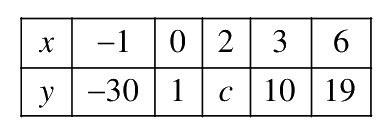
Let $g(x)$ be the polynomial of degree at most 4 that interpolates the data
\begin{tabular}{|c|c|c|c|c|c|}
\hline
$x$ & $-1$ & $0$ & $2$ & $3$ & $6$ \\
\hline
$y$ & $-30$ & $1$ & $c$ & $10$ & $19$ \\
\hline
\end{tabular}
If $g(4) = 5$, then which of the following statements are true?
a.
$c = 13$
b.
$g(5) = 6$
c.
$g(1) = 14$
d.
$c = 15$
Correct Answer & Step-by-Step Solution Locked
Sign in free to reveal the correct answer and AI explanation for this question.
The extremizer of the problem $\min \left[ \frac{1}{2} \int_{-1}^{1} \left[ (y'(x))^2 + (y(x))^2 \right] dx \right]$ subject to $y \in C^1[-1, 1]$, $\int_{-1}^{1} x y(x) dx = 0$ and $y(-1) = y(1) = 1$ is
a.
$\frac{e}{1+e^2}(e^x + e^{-x}) + x^2 - 1$
b.
$\frac{e}{1+e^2}(e^x + e^{-x}) + 1 - x^2$
c.
$\frac{e}{1+e^2}(e^x + e^{-x})$
d.
$\frac{e}{1+e^2}(e^x + e^{-x}) + \sin(2\pi x)$
Correct Answer & Step-by-Step Solution Locked
Sign in free to reveal the correct answer and AI explanation for this question.
For $c \in \mathbb{R}$, consider the following Fredholm integral equation $y(x) = 1 + x + cx^2 + 2 \int_0^1 (1 - 3xt) y(t) dt$. Then the values of $c$ for which the integral equation admits a solution are
a.
$-8$
b.
$-6$
c.
$2$
d.
$6$
Correct Answer & Step-by-Step Solution Locked
Sign in free to reveal the correct answer and AI explanation for this question.
For $\lambda \in \mathbb{R}$ such that $|\lambda| < \frac{5}{32}$, let $R(x, t, \lambda)$ and $u$ denote the resolvent kernel and the solution, respectively, of the Fredholm integral equation $u(x) + \frac{\lambda}{2} \int_{-2}^2 (xt + x^2 t^2) u(t) dt$. Then which of the following statements are true?
Consider a solid torus of constant density $\rho$, formed by revolving the disc $(y-b)^2 + z^2 \le a^2$, $x = 0$ about the $z$-axis, where $0 < a < b$. Then the moment of inertia of the solid torus about the $z$-axis is
a.
$2\pi^2 a^2 b^2 (4b^2 + 3a^2)\rho$
b.
$\frac{\pi^2}{2} a^2 b (4b^2 + 3a^2)\rho$
c.
$\frac{\pi^2}{2} a^2 b (4a^2 + 3b^2)\rho$
d.
$2\pi^2 a^2 b^2 (4a^2 + 3b^2)\rho$
Correct Answer & Step-by-Step Solution Locked
Sign in free to reveal the correct answer and AI explanation for this question.