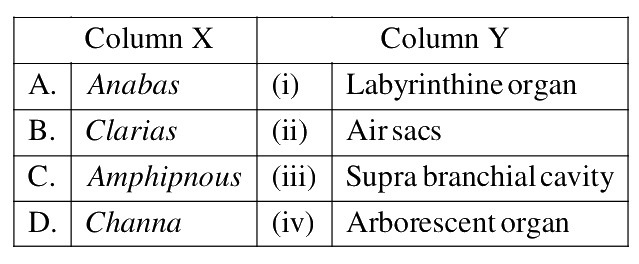
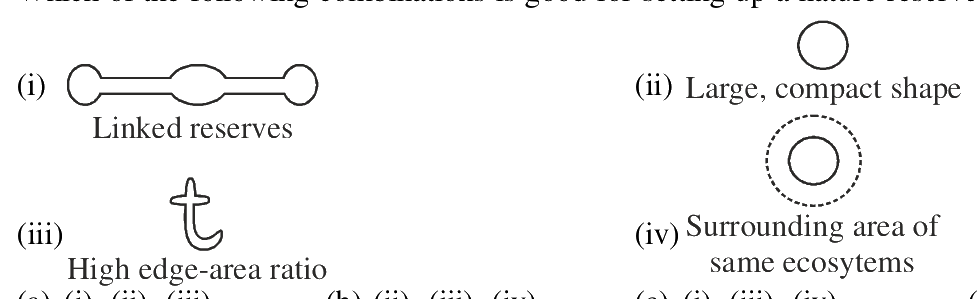
Out of the following hydrogen bonding schemes shown by ...... which one corresponds to the weakest hydrogen bond in a given solvent condition?
a.
$\text{O}-\text{H}\dots\text{O}<$
b.
$\text{N}-\text{H}\dots\text{O}<$
c.
$\text{O}-\text{H}\dots\text{N}<$
d.
$\text{N}-\text{H}\dots\text{N}<$
Correct Answer
Step-by-Step AI Explanation
Verified Method
Hydrogen bond strength depends on the electronegativity and polarizability of the donor and acceptor atoms. Oxygen is significantly more electronegative than nitrogen, making $\text{O}-\text{H}$ a more polarized bond (better donor) than $\text{N}-\text{H}$, and an oxygen atom a stronger, more electronegative acceptor. Therefore, the bond involving the least electronegative donor and acceptor pair, $\text{N}-\text{H}\dots\text{N}<$, is the weakest among the given options.
Q22mcq
Which peptide bond (s) marked as a, b, c, d and e will be broken when the following oligopeptide is treated with trypsin at pH 7.0?
$$\text{Lys} \xrightarrow{\text{a}} \text{Arg} \xrightarrow{\text{b}} \text{pro} \xrightarrow{\text{c}} \text{Lys} \xrightarrow{\text{d}} \text{Arg} \xrightarrow{\text{e}} \text{Gly}$$
a.
a, b, d, e
b.
b, d, e
c.
d, e
d.
d
Correct Answer
Step-by-Step AI Explanation
Verified Method
Trypsin specifically cleaves peptide bonds at the carboxyl side of lysine (Lys) and arginine (Arg) residues, EXCEPT when the following residue is proline (Pro).
- Bond 'a' is between Lys and Arg: cleaved by trypsin.
- Bond 'b' is between Arg and Pro: NOT cleaved because Proline blocks trypsin cleavage.
- Bond 'c' is between Pro and Lys: Pro is not a cleavage target.
- Bond 'd' is between Lys and Arg: cleaved by trypsin.
- Bond 'e' is between Arg and Gly: cleaved by trypsin.
However, considering the options provided, only choice D ('d') or choice A ('a, b, d, e') contain typical subsets, but since 'b' cannot be cleaved due to Proline, any option containing 'b' is incorrect. Among the given options, D correctly specifies bond 'd' as being cleaved without erroneously including 'b'.
Q23mcq
During respiration, which of the following processes occur only inside mitochondria and not cytoplasm ?
a.
Glycolysis and the pentose-phosphate pathway.
b.
Glycolysis and the citric acid cycle.
c.
The citric acid cycle and oxidative phosphorylation
Correct Answer
d.
Glycolysis and oxidative phosphorylation
Step-by-Step AI Explanation
Verified Method
The citric acid cycle (Krebs cycle) occurs in the mitochondrial matrix, and oxidative phosphorylation occurs at the inner mitochondrial membrane in eukaryotic cells. In contrast, glycolysis and the pentose phosphate pathway occur in the cytoplasm.
Q24mcq
An enzyme catalysed reaction was measured in the presence and absence of an inhibitor. For an uncompetitive inhibition,
a.
only $\text{K}_{\text{m}}$ is increased.
b.
both $\text{K}_{\text{m}}$ and $\text{V}_{\max}$ are decreased.
Correct Answer
c.
only $\text{V}_{\max}$ is decreased.
d.
both $\text{K}_{\text{m}}$ and $\text{V}_{\max}$ are not affected.
Step-by-Step AI Explanation
Verified Method
In uncompetitive inhibition, the inhibitor binds exclusively to the enzyme-substrate ($ES$) complex. This decreases the concentration of free $ES$, pulling the equilibrium toward $ES$ formation and thereby lowering the apparent $K_m$ by a factor of $\alpha'$. Concurrently, it reduces the maximum catalytic capacity, decreasing $V_{\max}$ by the same factor $\alpha'$. Thus, both $K_m$ and $V_{\max}$ decrease.
Q25mcq
$\text{KCl}$ ($100\text{ mM}$) was entrapped inside large unilamellar vesicles. A diffusion potential across the bilayer can be generated by diluting with buffer containing
a.
$100\text{ mM }\text{KCl}$ and a protonophore.
b.
$100\text{ mM }\text{NaCl}$ and a protonophore.
c.
$100\text{ mM }\text{KCl}$ and a $\text{K}^+$- specific ionophore.
d.
$100\text{ mM }\text{NaCl}$ and a $\text{K}^+$- specific ionophore
Correct Answer
Step-by-Step AI Explanation
Verified Method
To generate a diffusion potential across the membrane, there must be a chemical gradient of a specific ion combined with selective permeability for that ion. Inside the vesicles, $[ ext{K}^+] = 100 ext{ mM}$. When diluted into a buffer containing $100 ext{ mM NaCl}$ (where $[ ext{K}^+]$ is zero outside), a concentration gradient for $ ext{K}^+$ is established. Adding a $ ext{K}^+$-specific ionophore (such as valinomycin) makes the membrane selectively permeable to $ ext{K}^+$, allowing $ ext{K}^+$ to flow out down its chemical gradient and creating an electrical potential (diffusion potential) across the bilayer.
Q26mcq
Acetylcholine receptor is an archetype for:
a.
Ligand-gated ion channel
Correct Answer
b.
ATPase dependent voltage-gated ion channel
c.
ATPase dependent $\text{Ca}^{2+}$-gated ion channel
d.
ATPase independent voltage gated ion channel
Step-by-Step AI Explanation
Verified Method
The nicotinic acetylcholine receptor is the classic archetype of a ligand-gated ion channel (specifically a pentameric ionotropic receptor). When the neurotransmitter acetylcholine binds to it, the channel undergoes a conformational change allowing cations ($ ext{Na}^+$, $ ext{K}^+$, and $ ext{Ca}^{2+}$) to flow passively down their electrochemical gradients without the use of ATP.
Q27mcq
With reference to lac operon, what will be the phenotype of an E. coli strain having a genotype $\text{I}^- \text{O}^+ \text{Z}^+ \text{Y}^- / \text{F}' \,\text{I}^+ \text{O}^\text{C} \text{Z}^- \text{Y}^+$?
a.
Constitutive for both $\beta$-galactosidase and lac permease.
b.
Inducible for both $\beta$-galactosidase and lac permease.
c.
Inducible for $\beta$-galactosidase and constitutive for lac permease.
Correct Answer
d.
Constitutive for $\beta$-galactosidase and inducible for lac permease.
Step-by-Step AI Explanation
Verified Method
Let's analyze the partial diploid genotype: $\text{I}^- \text{O}^+ \text{Z}^+ \text{Y}^- / \text{F}' \,\text{I}^+ \text{O}^\text{C} \text{Z}^- \text{Y}^+$.
- The $\text{I}^+$ gene is present and encodes the functional repressor protein, which is diffusible (acts in *trans*) and can bind to any wild-type operator ($\text{O}^+$).
- The $\text{Z}^+$ allele (coding for $\beta$-galactosidase) is in *cis* with the wild-type operator $\text{O}^+$. The repressor binds to this $\text{O}^+$, keeping transcription of $\text{Z}^+$ repressed until an inducer is present. Thus, $\beta$-galactosidase is **inducible**.
- The $\text{Y}^+$ allele (coding for permease) is in *cis* with the constitutive operator $\text{O}^\text{C}$. The repressor cannot bind to $\text{O}^\text{C}$, meaning transcription occurs continuously regardless of inducer presence. Thus, permease is **constitutive**.
Q28mcq
An organism that has peroxidase and superoxide dismutase but lacks catalase is most likely an
a.
Aerotolerant anaerobe.
Correct Answer
b.
Aerotolerant aerobe.
c.
Obligate anaerobe.
d.
Facultative anaerobe.
Step-by-Step AI Explanation
Verified Method
Aerotolerant anaerobes do not use aerobic respiration (they rely entirely on fermentation), but they can tolerate the presence of oxygen because they produce superoxide dismutase (SOD) and peroxidase (which break down harmful superoxide and peroxides, respectively). They typically lack catalase, unlike obligate or facultative aerobes.
Q29mcq
During DNA replication, events at the replication fork require different types of enzymes having specialized functions except
a.
DNA polymerase III.
b.
DNA gyrase.
c.
DNA ligase.
d.
DNA glycosylase.
Correct Answer
Step-by-Step AI Explanation
Verified Method
During DNA replication, DNA polymerase III synthesizes the new strands, DNA gyrase (topoisomerase) relieves supercoiling ahead of the replication fork, and DNA ligase seals the nicks between Okazaki fragments. DNA glycosylase, however, is an enzyme involved in base excision repair (BER) to remove damaged or inappropriate nitrogenous bases, and is not a replication fork enzyme.
Q30mcq
Which of the following names is appropriate for the sequence 5'-G/ANNAUG -3' in a mammalian mRNA?
a.
Shine-Dalgarno sequence
b.
Kozak sequence
Correct Answer
c.
Internal ribosome entry sites
d.
Translation termination site
Step-by-Step AI Explanation
Verified Method
The consensus sequence $5'\text{-(gcc)gccRccAUGG}-3'$ (where R is a purine, A or G), often simplified as $5'\text{-G/ANNAUG}-3'$, in eukaryotic (mammalian) mRNA is known as the Kozak sequence, which functions as the protein translation initiation site.
🎉 10 Free Sample Solutions Completed
Unlock All 118 Questions & Solutions
Sign up free in seconds to unlock step-by-step AI answers for the remaining 108 questions.
Presence of the nuclear localization signal (NLS) in a steroid receptor indicates that the receptor resides
(Recent literature suggest that steroid receptors are located in nucleus)
a.
on the nuclear membrane
b.
within the nucleus.
c.
on the cell membrane.
d.
in the cytosol.
Correct Answer & Step-by-Step Solution Locked
Sign in free to reveal the correct answer and AI explanation for this question.
Change in $\text{Ca}^{2+}$ concentration can initiate various responses in plants. Which one of the following responses is NOT known to be initiated by change in $\text{Ca}^{2+}$ concentration?
a.
Closure of stomata.
b.
Reorientation of growth in pollen tubes.
c.
Thickening of cell walls in young tobacco seedlings in response to wind.
d.
Lateral root formation.
Correct Answer & Step-by-Step Solution Locked
Sign in free to reveal the correct answer and AI explanation for this question.
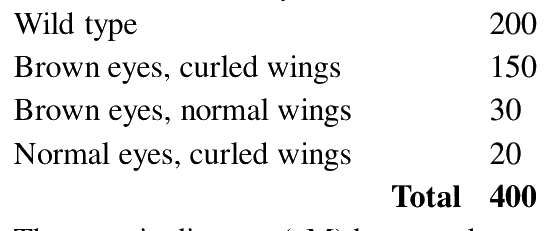
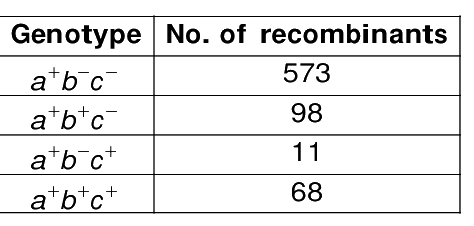
A cross was made between pure wild type males and brown eyed curled winged females of D. melanogaster. The $\text{F}_1$ females were test crossed. The $\text{F}_2$ progeny obtained was as follows:
\begin{tabular}{ll}
Wild type & 200 \\
Brown eyes, curled wings & 150 \\
Brown eyes, normal wings & 30 \\
Normal eyes, curled wings & 20 \\
\textbf{Total} & \textbf{400}
\end{tabular}
The genetic distance (cM) between brown eye and curled wing loci is:
a.
12.5
b.
50
c.
150
d.
25
Correct Answer & Step-by-Step Solution Locked
Sign in free to reveal the correct answer and AI explanation for this question.
The effect of nonsense mutation could be nullified by reversion as well as suppression. Which of the following processes will help to distringuish between the two kinds of revertants ?
a.
Complementation
b.
Transgenesis
c.
Test for allelism
d.
Recombination
Correct Answer & Step-by-Step Solution Locked
Sign in free to reveal the correct answer and AI explanation for this question.
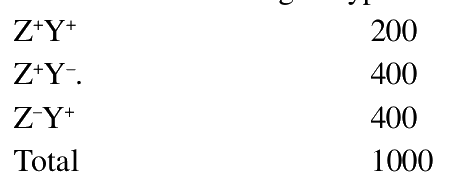
In a transformation experiment, donor DNA from an E. coli strain with the genotype $\text{Z}^+\text{Y}^+$ was used to transform a strain of genotype $\text{Z}^-\text{Y}^-$. The frequencies of transformed classes were:
\begin{tabular}{ll}
$\text{Z}^+\text{Y}^+$ & 200 \\
$\text{Z}^+\text{Y}^-$ & 400 \\
$\text{Z}^-\text{Y}^+$ & 400 \\
Total & 1000
\end{tabular}
What is the frequency (\%) with which Y locus is cotransformed with the Z locus?
a.
1
b.
2
c.
3.33
d.
40
Correct Answer & Step-by-Step Solution Locked
Sign in free to reveal the correct answer and AI explanation for this question.
A plant species has been described for the first time by author 'x'. Later, the species has been transferred to some other genus by author 'y'. Then the author citation for the new combination will be
a.
$x\text{ et }y$
b.
x ex y
c.
(x)y
d.
(y) x
Correct Answer & Step-by-Step Solution Locked
Sign in free to reveal the correct answer and AI explanation for this question.
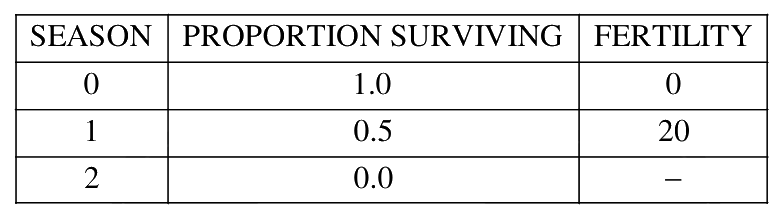
The following table shows survival and fertility data for a seasonally breeding species.
Based on above data, net reproductive rate ($R_0$) of the species will be
a.
1
b.
5
c.
10
d.
20
Correct Answer & Step-by-Step Solution Locked
Sign in free to reveal the correct answer and AI explanation for this question.
In some species of new. world monkeys, only one female reproduces in a group. One or more younger females have suppressed reproduction and assist the reproductive female. This is an example of
a.
Sexual selection.
b.
Group selection.
c.
Kin selection.
d.
Reciprocal altruism.
Correct Answer & Step-by-Step Solution Locked
Sign in free to reveal the correct answer and AI explanation for this question.
The idea that an altruistic gene will be favored if $r > C/B$, where $r$ is the coefficient of relatedness, $B$ is the benefit to the recipient of the altruism, and $C$ is the cost incurred to the donor, is known as
a.
red queen hypothesis.
b.
handicap principle,
c.
Hamilton's rule.
d.
competitive exclusion principle.
Correct Answer & Step-by-Step Solution Locked
Sign in free to reveal the correct answer and AI explanation for this question.
Optical density of a 400 base pair long 1 ml DNA solution was found to be 0.052. How many DNA molecules are present in the solution?
[1 base pair = 650 dalton, optical density of 1.0 D corresponds to 50 $\mu\text{g}$ DNA/ml]
a.
$6.023 \times 10^{12}$
b.
$6.023 \times 10^{13}$
c.
$4.633 \times 10^{18}$
d.
$5.2 \times 10^{13}$
Correct Answer & Step-by-Step Solution Locked
Sign in free to reveal the correct answer and AI explanation for this question.
The movement of a single cell was required to be continually monitored during development. This cell was marked with a reporter gene. To visualize this movement one would use
a.
phase contrast microscopy.
b.
bright field microscopy.
c.
fluorescence microscopy.
d.
atomic force microscopy.
Correct Answer & Step-by-Step Solution Locked
Sign in free to reveal the correct answer and AI explanation for this question.
The Gibbs free energy of binding of a ligand with a protein is determined using calorimetric measurements at $25^\circ\text{C}$. The value of $\Delta \text{G}^0$ thus determined is $1.36\text{ kcal/mole}$. The binding constant for the ligand-protein association is:
a.
$1.30 \times 10^{-12}$
b.
$0.10$
c.
$1.00$
d.
$0.97$
Correct Answer & Step-by-Step Solution Locked
Sign in free to reveal the correct answer and AI explanation for this question.
A is converted to E by enzymes $\text{E}_\text{A}$, $\text{E}_\text{B}$, $\text{E}_\text{c}$, $\text{E}_\text{D}$. The $\text{K}_\text{m}(\text{M})$ values of the enzymes are $10^{-2}$, $10^{-4}$, $10^{-5}$ and $10^{-4}$, respectively. If all the substrates and products are present at a concentration of $10^{-4}\text{ M}$, and the enzymes have approximately the same $\text{V}_\text{max}$ the rate limiting step will be:
The molecular mass of a protein determined by gel filtration is 120 kDa. When its mass is determined by SDS-PAGE with and without $\beta$-mercaptoethanol, it is only 60 kDa. What is the most probable explanation for these observations?
a.
Protein is a dimer in which two identical chains are cross-linked by disulphide bonds.
b.
Protein is a monomer of molecular mass 60 kDa but it is excluded from the gel matrix due to strong repulsion between the gel matrix and the protein.
c.
Protein is most likely to be composed of two sub-units having identical molecular mass.
d.
Protein is a monomer but it is nicked into half its size by SDS.
Correct Answer & Step-by-Step Solution Locked
Sign in free to reveal the correct answer and AI explanation for this question.
Mouse IgG is left either intact (left lane in A, B, C, D) or digested with papain or pepsin or treated with $\beta$-mercaptoethanol ($\beta$-ME) and run on non-reducing SDS-PAGE and stained with Coomassie blue. In a separate experiment, papain-digested products are immunoblotted with an anti-idiotypic monoclonal antibody. Following four profiles are attributed to each of these treatments.
Which one of the following possibilities is correct?
a.
A( pepsin), B (papain), C ($\beta$-ME), D (papain, followed by antiidiotype immunoblot)
b.
A( papain), B (pepsin), C (papain, followed by antiidiotype immunoblot,D ($\beta$-ME)
c.
A (papain, followed by antiidiotype immunoblot), B (papain ), C (pepsin), D ($\beta$-ME)
d.
A ($\beta$-ME), B (papain), C (pepsin), D (papain, followed by antiidiotype immunoblot)
Correct Answer & Step-by-Step Solution Locked
Sign in free to reveal the correct answer and AI explanation for this question.
Phosphatidyl serine (PS) is mostly located in the inner bilayer of plasma membrane of red blood cells (RBCs). You have to prove this fact about PS by an experiment. You are provided with PS-specific lytic enzymes (PSE) and other reagents needed. Identify the correct sequence of experiments to be carried out to settle this issue.
a.
RBCs $\rightarrow$ inside out vesicles $\rightarrow$ PSE $\rightarrow$ Thin Layer Chromatography (TLC)
b.
RBCs $\rightarrow$ right side out vesicles $\rightarrow$ TLC $\rightarrow$ PSE
c.
RBCs $\rightarrow$ PSE $\rightarrow$ Inside out vesicles $\rightarrow$ TLC
d.
RBCs $\rightarrow$ PSE $\rightarrow$ TLC $\rightarrow$ Inside out vesicles
Correct Answer & Step-by-Step Solution Locked
Sign in free to reveal the correct answer and AI explanation for this question.
ATP-driven pumps hydrolyze ATP to ADP and phosphate and use the energy released to pump ions or solutes across a membrane. There are many classes of these pumps and representatives of each are found in all prokaryotic and eukaryotic cells. Which of the following statements about these pumps is NOT correct?
a.
P-type pumps are multipass transmembrane proteins which phosphorylate themselves during pumping and involve in ion transport.
b.
F-type pumps normally use the H+ gradient across the membrane to drive the synthesis of ATP.
c.
V-type pumps normally use voltage gradient for transport of small molecules.
d.
ABC transporters primarily pump small molecules across cell membrane.
Correct Answer & Step-by-Step Solution Locked
Sign in free to reveal the correct answer and AI explanation for this question.
Following are statements related to the organization of the four major protein complexes of thylakoid membrane.
A. Photosystem II is located predominantly in the stacked regions of the thylakoid membrane.
B. Photosystem I is found in the unstacked regions protruding into stroma.
C. Cytochrome $\text{B}_6\text{f}$ complex is confined to stroma only.
D. ATP synthase is located in the unstacked regions protruding into stroma.
Which one of the following combinations of above statements is correct?
a.
A, B and C
b.
A, B and D
c.
B, C and D
d.
C, D and A
Correct Answer & Step-by-Step Solution Locked
Sign in free to reveal the correct answer and AI explanation for this question.
A bacterial population has a plasmid with copy number 'n'. It was observed that on an average in one out of $2^{(n-1)}$ cell divisions, there was spontaneous plasmid curing. It was inferred from the observation that:
A. Each cell division does not have equal probability of plasmid curing.
B. There is no evidence for any mechanism of plasmid segregation in the two daughter cells.
C. Plasmid distribution to daughter cells is random.
D. Each plasmid has an equal chance of being in either of the two daughter cells.
Which of the combinations of above statements is true?
a.
A and B
b.
B and D
c.
Only A
d.
B, C and D
Correct Answer & Step-by-Step Solution Locked
Sign in free to reveal the correct answer and AI explanation for this question.
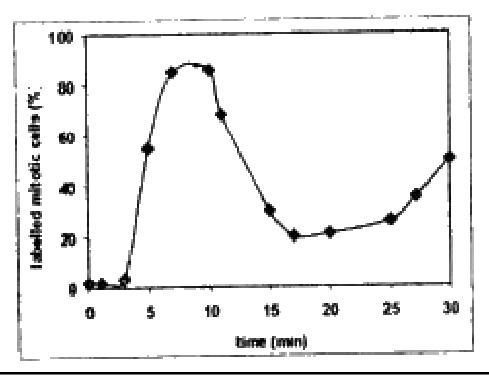
In a given experiment the cells were labeled for 30 minutes with radioactive thymidine. The medium was then replaced with that containing unlabelled thymidine and the cells were grown for additional time. At different time points after replacement of medium the fraction of mitotic cells were analysed. Based on the results obtained, the above figure was drawn which shows the percentage of mitotic cells that are labeled as a function of time after brief incubation with radioactive thymidine.
Considering the above experiment, the following statements were made:
A. Cells in the S-phase of the cell cycle during the 30 minute labeling period contain radioactive DNA.
B. It takes about 3 hours before the first labeled mitotic cells appear.
C. The cells enter the second round of mitosis at $\text{t}_{30}$ hours.
D. The total length of the cell cycle is about 27 hours with $\text{G}_1$, being more than 15 hours.
Which of the combination of above statements is correct?
a.
A and B
b.
B and C
c.
C and D
d.
A and D
Correct Answer & Step-by-Step Solution Locked
Sign in free to reveal the correct answer and AI explanation for this question.
Mutants of lac Y ($\text{Y}^-$) gene of E. coli do not synthesize the lactose permease protein. The following statements refer to the behaviour of lac $\text{Y}^-$ mutants under different experimental conditions.
A. No synthesis of $\beta$-galactosidase when $\text{Y}^-$ cells are induced with lactose.
B. Synthesis of $\beta$-galactosidase when cells are induced with lactose.
C. No synthesis of $\beta$-galactosidase when cells are induced with IPTG.
D. Synthesis of $\beta$-galactosidase when cells are induced with IPTG.
E. The cells induced with IPTG cannot grow in the presence of TONPG (TONPG is a compound, whose uptake is mediated by lactose permease and cleaved by $\beta$-galactosidase to release a toxic compound). F. Cells induced with IPTG can grow in the presence of TONPG.
Which combination of the above statements is correct?
a.
A, D and F
b.
B, C and
c.
A, C and F
d.
A, C and E
Correct Answer & Step-by-Step Solution Locked
Sign in free to reveal the correct answer and AI explanation for this question.
The semi-conservative nature of DNA replication was established by Meselson and Stahl in their classic experiment with bacteria. They grew bacteria in $\text{N}^{15}\text{-NH}_4\text{Cl}$ containing medium, washed and then incubated in fresh medium with $\text{N}^{14}$-containing compounds and allowed to grow for three generations. CsCl density gradient centrifugation of isolated DNA established the nature of semiconservative DNA replication. The pictorial representation below shows the position of differentially labeled DNA in CsCl density gradient.
Had the DNA replication been conservative, what would have been the pattern?
a.
(a)
b.
(b)
c.
(c)
d.
(d)
Correct Answer & Step-by-Step Solution Locked
Sign in free to reveal the correct answer and AI explanation for this question.
HeLa cell extract was used to study transcription of a gene ‘X’ having six introns. RNA Pol II complex containing all associated proteins was isolated from actively transcribing system and subjected to proteome analysis. Results showed the presence of both splicing and capping enzymes in the complex. When transcription elongation was inhibited by flavopiridol, polymerase complex contained only capping enzymes. When phosphorylation of the CTD domain of Pol II was inhibited by a kinase inhibitor, the complex contained neither splicing nor capping enzymes.
From these results, following conclusions were made:
A. Transcription of gene X is coupled to mRNA capping.
B. Transcription elongation is coupled to splicing.
C. Phosphorylation of CTD is required for the recruitment of capping and splicing enzymes.
D. Both capping and splicing of mRNAs occurs simultaneously.
Identify the correct set of conclusions:
a.
A, B and C
b.
B, C and D
c.
C, D and A
d.
D, A and B
Correct Answer & Step-by-Step Solution Locked
Sign in free to reveal the correct answer and AI explanation for this question.
In bacteria, N-formyl methionine is the first amino acid to be incorporated into a polypeptide chain. Accordingly, one would think that all bacterial proteins have a formyl group at their amino terminus and the first amino acid is methionine. However, this is not the case, because of the following possible reasons.
A. Deformylase removes the formyl group only during or after the synthesis of the polypeptides.
B. Aminopeptidase removes only the amino terminal methionine.
C. Aminopeptidase removes the amino terminal methionine as well as one or two additional amino acids.
D. Deformylase removes the formyl group as well as amino terminal methionine and adds one or two amino acids to it.
Choose the combination of correct answers from the following:
a.
B and C
b.
A and B
c.
A and C
d.
A and D
Correct Answer & Step-by-Step Solution Locked
Sign in free to reveal the correct answer and AI explanation for this question.
Bacteriophage $\lambda$ is a temperate phage. Immediately after infection, viral specific mRNAs for N and Cro proteins are expressed followed by early mRNAs. At the commitment phase, either lytic cycle starts with the expression of genes for head tail, and lytic proteins or lysogenisation cycle begins with the expression of repressor and integrase genes. During induction of lysogens both INT and XIS proteins are needed along with host factors. Out of the four processes below, some govern Integration of viral genome and its excision?
A. Repression of transcription
B. Retroregulation
C. Rearrangement of viral genome
D. Repression of translation
Identify the correct set of combination:
a.
A and B
b.
B and C
c.
C and D
d.
D and A
Correct Answer & Step-by-Step Solution Locked
Sign in free to reveal the correct answer and AI explanation for this question.
In $E.\ coli$, recA gene is involved in recombination as well as repair and dnaB gene is involved in unwinding of DNA double strands during replication. Which of the following statement is/are correct about Rec A and Dna B?
A. Mutation in $E.\ coli$ recA gene is lethal.
B. $E.\ coli$ with mutated dnaB gene does not survive.
C. Dna B after uncoiling DNA double strands, prevents further reannealing at the separated strands.
D. Rec A gene is involved in SOS response and helps DNA repair.
The correct options are:
a.
B and C
b.
A and B
c.
B and D
d.
A and C
Correct Answer & Step-by-Step Solution Locked
Sign in free to reveal the correct answer and AI explanation for this question.
The challenges faced by aminoacyl tRNA synthetases in selecting the correct amino acid is more daunting than its recognition of the appropriate tRNA. In case of amino acids with similar structures like valine and isoleucine, this challenge is met by the enzyme possibly through its
A. catalytic pocket.
B. editing pocket.
C. anticodon loop.
D. acceptor arm.
Choose the correct set from the following:
a.
A and B
b.
A and C
c.
B and D
d.
B and C
Correct Answer & Step-by-Step Solution Locked
Sign in free to reveal the correct answer and AI explanation for this question.
p24 is an important core protein of HIV. This protein is abundant during active replication of the virus. The serum of an HIV patient was examined for the presence of p24 and antibody against p24 for proper diagnosis of the infection stage. Match the clinical observations in column A with the inferences in column B.
\begin{tabular}{|l|l|}
\hline
\textbf{Column A} & \textbf{Column B} \\
\hline
A. p24 is present in the serum. & a. viral latency \\
B. Anti-p24 antibody is high in the serum. & b. progression of HIV from latency to lytic stage \\
C. Anti-p24 antibody begins to decline with corresponding increase in p24. & c. early stage of infection \\
\hline
\end{tabular}
Choose the correct matching
a.
A-a, B-b, C-c
b.
A-b, B-a, C-c
c.
A-c, B-a, C-b
d.
A-c, B-b, C-a
Correct Answer & Step-by-Step Solution Locked
Sign in free to reveal the correct answer and AI explanation for this question.
Epidermal growth factor (EGF) is needed for growth of almost all cells. EGF receptor is a transmembrane protein having an extracellular ligand-binding domain, a transmembrane domain and a cytosolic domain of protein tyrosine kinase (PTK). Binding of EGF to the receptor activates PTK resulting in activation of transcription factors through intracellular transducers. In cell type A, much of the extra cellular ligand-binding domain is deleted by proteases such that cytosolic domain of PTK becomes constitutively active whereas cell type B is having normal EGF receptor. What will be the best-fit graph for the growth of the cultures of cell type A and B in complete medium in presence (+) and absence (-) of EGF'?
Correct Answer & Step-by-Step Solution Locked
Sign in free to reveal the correct answer and AI explanation for this question.
Following are the experimental observations made on treatment of B cells:
A. Anti-immunoglobulin (anti-Ig) antibody treatment results in B cell apoptosis.
B. Anti-Ig plus CD40 ligand treatment results in B cell proliferation.
C. Anti-Ig plus CD40 ligand plus IL-4 treatment results in B cell proliferation and switching to IgG1.
D. Anti-Ig plus 1L4 treatment results in less B cell proliferation but switching to IgE.
From the above observation, which one of the following is the correct interpretation for the role of CD40 in B cell function?
a.
Induce death of B cells.
b.
Rescue B cells from death and Ig class switch to IgG1.
c.
Inducing Ig class switch to IgE.
d.
Induce Ig class switching to both IgG1 and IgE and inhibit B cell proliferation.
Correct Answer & Step-by-Step Solution Locked
Sign in free to reveal the correct answer and AI explanation for this question.
A potentially valuable therapeutic approach for killing tumor cells without affecting normal cells is the use of immunotoxins. Immunotoxins constitute monoclonal antibodies against tumor cells conjugated to lethal toxins. Which of the following molecular approaches do you think is NOT appropriate for generating tumor cell-specific immunotoxin that will not kill normal cells?
a.
Cell surface receptor binding polypeptide chain of toxin molecule should be replaced by monoclonal antibodies against a particular tumor cell type.
b.
Constant region Fc domain of tumor cell specific monoclonal antibody should be replaced by ligation of toxins.
c.
Variable region $\text{F(ab)}_2$ domain of tumor cell-specific monoclonal antibody should be replaced by ligation of toxins.
d.
Inhibitor polypeptide chain of toxin should be conjugated to $\text{F(ab)}_2$, domain of tumor cell specific monoclonal antibody.
Correct Answer & Step-by-Step Solution Locked
Sign in free to reveal the correct answer and AI explanation for this question.
Flowers represent a complex array of functionally specialized structures that differ substantially from the vegetative plant body in form and cell types. Following are statements made regarding floral meristems.
A. Floral meristems can usually be distinguished from vegetative meristems by their larger size.
B. The increase in the size of the meristem is largely a result of increased rate of cell division in central cells.
C. The increase in the size of the meristem is due to larger size of the cells, which in turn results from rapid cell expansion only.
D. A network of genes control floral morphogenesis in plants.
Which combination of the above statements is true?
a.
A, B and D
b.
A, B and C
c.
B, C and D
d.
A, C and D
Correct Answer & Step-by-Step Solution Locked
Sign in free to reveal the correct answer and AI explanation for this question.
Three embryos, X (wild type), Y (mutant for bicoid) and Z (mutant for nanos) were injected with bicoid mRNA in their posterior pole at early cleavage stage. What would be the phenotypes of the resulting embryos?
a.
Embryo X will develop head on both anterior and posterior side, while embryos Y and Z will develop head on posterior side only.
b.
Embryos X and Z will develop head on both anterior and posterior side, while embryo Y will develop head on posterior end only.
c.
Embryos X, Y and Z will develop head on both anterior as well as posterior side.
d.
Embryo X will develop head on anterior side, embryo Y will develop no head, while embryo Z will develop head on anterior as well as posterior side.
Correct Answer & Step-by-Step Solution Locked
Sign in free to reveal the correct answer and AI explanation for this question.
In C. elegans during embryogenesis, an anchor cell and 6 hypodermal vulval precursor cells (VPCs) get involved in forming the vulva. If 3 of the hypodermal VPCs are killed by a laser beam, a normal vulva is still formed. This could be due to the following possible reasons.
A. Six hypodermal VPCs form equivalence group of cells, out of which only 3 participate in vulva formation and 3 cells remain as reserve cells.
B. When 3 hypodermal VPCs are killed, the 3 neighboring hypodermal non- VPCs get freshly recruited. C. Anchor cell functions as an inducer which can induce epithelial cells of the gonad to gel recruited to compensate for the loss.
D. Anchor cell acts as an inducer which can spatially induce only 3 hypodermal cells to form the vulva.
Which combination of the above statements is correct?
a.
A and B
b.
B and C
c.
C and D
d.
A and D
Correct Answer & Step-by-Step Solution Locked
Sign in free to reveal the correct answer and AI explanation for this question.
In tadpoles, if the tail is amputated it can regenerate. However, if the tail is amputated and then exposed to retinoic acid, it develops limbs instead of regenerating the tail. This could be due to the following reasons:
A. Retinoic acid is a morphogen and induces genes responsible for limb formation.
B. Retinoic acid raises the positional values in that region for limb development to take place.
C. This is a random phenomenon and is not well understood.
D. Retinoic acid possibly acts as a mutagen and the phenotype observed is a result of several mutations.
Which combination of the above statements is true?
a.
A and B
b.
C and D
c.
B and D
d.
B and C
Correct Answer & Step-by-Step Solution Locked
Sign in free to reveal the correct answer and AI explanation for this question.
In sea urchins, a group of cells at the vegetal pole become specified as the large micromere cells. These cells are determined to become skeletogenic mesenchyme cells that will leave the blastula epithelium to ingress into the blastocoel. This specification is controlled by the expression of Pmar1 which is a repressor of HesC. HesC represses the genes encoding transcription factors activating skeleton forming genes. The gene regulatory network is given below.
Below, column I lists the experiments carried with mRNA/antisense RNA of different genes injected into single celled sea urchin embryo while column II lists the developmental outcomes: Match the following:
| Column I (Injection of) | Column II (developmental outcomes) |
| :--- | :--- |
| A. mRNA of Pmar1 | 1. All cells will start ingressing into the blastocoel |
| B. mRNA of HesC | 2. Skeleton mesenchyme will not be formed |
| C. Antisense of Pmar1 | |
| D. Antisense of HesC | |
Which of the following combinations is correct?
a.
A-2, B-1, C-1, D-2
b.
A-1, B-1, C-2, D-2
c.
A-1, B-2, C-2, D-1
d.
A-2, B-2, C-2, D-2
Correct Answer & Step-by-Step Solution Locked
Sign in free to reveal the correct answer and AI explanation for this question.
In plants, the energy of sunlight is first absorbed by the pigments present in their leaf cells followed by the fixation of carbon through photosynthesis. Consider the following statements.
A. Chlorophylls a and b are abundant in green plants.
B. Chlorophylls c and d are found in some protists and cyanobacteria.
C. Out of different types of bacteriochlorophyll, type a is the most widely distributed.
D. Out of different types of bacteriochlorophyll, type b is the most widely distributed.
Which one of the following combination of above statements is correct?
a.
A, B and C
b.
A, C and D
c.
B, C and D
d.
A, B and D
Correct Answer & Step-by-Step Solution Locked
Sign in free to reveal the correct answer and AI explanation for this question.
Nitrate reductase is an important enzyme for nitrate assimilation. Given below are some statements on nitrate reductase enzyme:
A. Nitrate reductase of higher plants is composed of two identical subunits.
B. One subunit of nitrate reductase contains three prosthetic groups.
C. One of the prosthetic groups attached to both subunits is heme.
D. One of the prosthetic groups complexed with pterin is magnesium.
Which one of the following combination of statements on nitrate reductase mentioned above is correct?
a.
A, B and C
b.
A, C and D
c.
B, C and D
d.
A, B and D
Correct Answer & Step-by-Step Solution Locked
Sign in free to reveal the correct answer and AI explanation for this question.
A farmer growing a particular variety of grape plants in vineyard, observes the following :
A. Fruit size normally remained small
B. Natural seed abortion
C. Development of fungal infections as the pedicels are small in size due to which moisture is retained in the bunches of grapes.
Experts suggested spraying gibberellic acid during the fruit development. This treatment would help in getting rid of
a.
A, B and C
b.
Only A and B
c.
Only A and C
d.
Only B and C
Correct Answer & Step-by-Step Solution Locked
Sign in free to reveal the correct answer and AI explanation for this question.
Light is perceived by various photoreceptors in plants. The photoreceptors predominantly work at specific wavelengths of light. Some of the following statements are related to the functions of plant photoreceptors.
A. Phytochrome A predominantly perceives the red and far-red light.
B. Phytochrome B predominantly perceives red light.
C. Cryptochromes regulate plant development.
D. Phototropins are involved in blue light perception and chloroplast movements.
Which one of the following combinations based on above statements is correct?
a.
A, B and C
b.
B, C and D
c.
C, D and A
d.
A, B and D
Correct Answer & Step-by-Step Solution Locked
Sign in free to reveal the correct answer and AI explanation for this question.
From the following statements:
A. Triose phosphate is utilized for the synthesis of both starch and sucrose.
B. Triose phosphate is translocated to cytosol from chloroplast.
C. Triose phosphate is confined to chloroplast and is utilized for synthesis of starch only.
D. Triose phosphate is translocated from cytosol to chloroplast.
Which one of the following combinations is correct regarding starch and sucrose synthesis during day time?
a.
A and B
b.
B and C
c.
C and D
d.
D and A
Correct Answer & Step-by-Step Solution Locked
Sign in free to reveal the correct answer and AI explanation for this question.
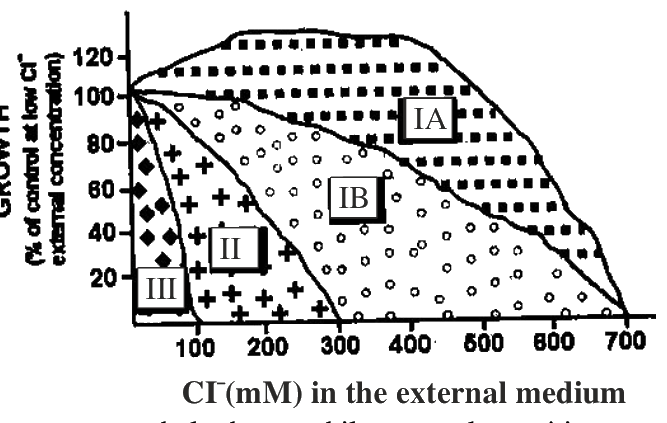
Shown below, is a graph representing the growth of different plant species subjected to salinity relative to that of unsalinized control. Which of the following statements is NOT true?
a.
Plants in group IA are extreme halophytes while very salt sensitive species will be part of group III.
b.
Plants in group IA are very salt sensitive and extreme halophytes will be part of group III.
c.
Halophytes, which can tolerate salt but their growth is retarded will be part of group IB.
d.
Non-halophytes, which are salt tolerant but lacks salt glands will be a part of group II.
Correct Answer & Step-by-Step Solution Locked
Sign in free to reveal the correct answer and AI explanation for this question.
Desert animals have longer loop of Henle compared to that of humans. It may be due to the following reasons:
A. Long loop of Henle is associated with greater amount of vasopressin secretion.
B. In long loop of Henle, the counter-current exchanger is more effective.
C. Long loop of Henle conserves more water.
D. Long loop of Henle stimulates production of angiotensin II.
Which of the above reason(s) is/are correct? Experiment I : $E.\ coli$ K cells were simultaneously infected with two $rII$ mutants ($a^-$ and $b^-$). Several plaques with wild type morphology were formed.
Experiment II : $E.\ coli$ B cells were simultaneously infected with the same mutants as above. T4 phages were isolated from the resulting plaques and used to infect $E.\ coli$ K cells. Few plaques with wild type morphology were formed.
Which one is the correct conclusion made regarding the $rII$ mutants, $a^-$ and $b^-$ from the above experiments?
a.
A and B
b.
B and C
c.
C and D
d.
only D
Correct Answer & Step-by-Step Solution Locked
Sign in free to reveal the correct answer and AI explanation for this question.
The following pedigree represents inheritance of a trait in an extended family:
What is the probable mode of inheritance and which individuals conclusively demonstrate this mode of inheritance?
a.
Autosomal recessive, III-2, 3 and IV- 1,2 conclusively demonstrate the mode of inheritance.
b.
Autosomal recessive, I-1,2 and II-2 conclusively demonstrate the mode of inheritance.
c.
Autosomal dominant, III- 2, 3 and IV-1, 2 conclusively demonstrate the mode of inheritance.
d.
X-linked recessive, II- 3,4 and 5 conclusively demonstrate the mode of inheritance.
Correct Answer & Step-by-Step Solution Locked
Sign in free to reveal the correct answer and AI explanation for this question.
Following is the diagram of a paracentric inversion heterozygote ABCDEFG/ABFEDCG involved in recombination during meiosis I:
The consequence of this recombination will be the formation of
A. A dicentric and an acentric chromosome in meiosis I as the chiasmata gets terminated.
B. No dicentric or acentric chromosome but appearance of deletion and duplication in both the chromosomes,
C. All non-viable gametes.
D. Non-viable gametes from crossover products.
Which of the above statements are correct ?
a.
A and B
b.
A and C
c.
A and D
d.
B and C
Correct Answer & Step-by-Step Solution Locked
Sign in free to reveal the correct answer and AI explanation for this question.
An *E. coli* strain has $metB1$ ($90\text{ min}$) and $leuA5$ ($2\text{ min}$) mutations. It also has $strA7$ ($73\text{ min}$) mutation and $Tn5$ transposon which confers streptomycin and kanamycin resistance, respectively, inserted in its chromosome, The mutant strain was crossed with an $Hfr$ strain that is streptomycin sensitive and has a $hisG2$ mutation ($44\text{ min}$) that makes it require histidine. After incubation for $100\text{ min}$, the cells were plated on minimal plate supplemented with leucine, histidine and streptomycin to select the $metB$ marker. After purifying $100$ of the $\text{Met}^+$ transconjugants, one finds that $15$ are $\text{His}^+$, $2$ are $\text{Leu}^+$ and $12$ are kanamycin sensitive. The unselected markers are
A. $metB1$ and $leuA5$ mutation.
B. $leuA5$ and $Tn5$ insertion mutation.
Which of the above statement is correct and what is the position of transposon insertion?
a.
A and before $73\text{ min}$
b.
B and before $44\text{ min}$
c.
B and before $73\text{ min}$
d.
A and before $44\text{ min}$
Correct Answer & Step-by-Step Solution Locked
Sign in free to reveal the correct answer and AI explanation for this question.
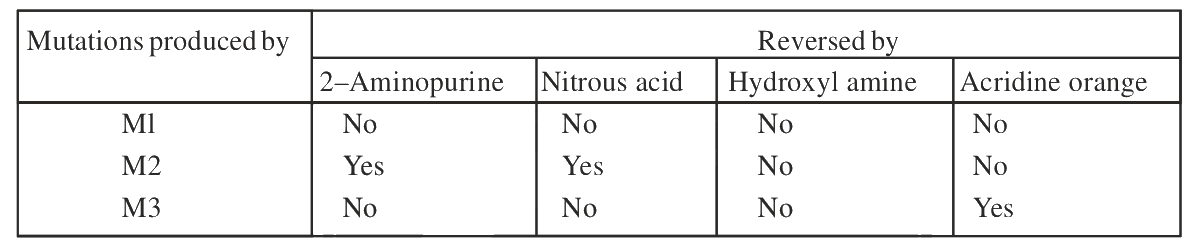
A chemist synthesized three new chemical compounds, M1, M2 and M3 The compounds were tested for their mutagenic potential and were found to be highly mutagenic. Tests were made to characterize the nature of mutations by allowing the reversion with other mutagens, The following results were obtained:
\begin{tabular}{|c|c|c|c|c|}
\hline
\multirow{2}{*}{Mutations produced by} & \multicolumn{4}{c|}{Reversed by} \\
\cline{2-5}
& 2-Aminopurine & Nitrous acid & Hydroxyl amine & Acridine orange \\
\hline
M1 & No & No & No & No \\
M2 & Yes & Yes & No & No \\
M3 & No & No & No & Yes \\
\hline
\end{tabular}
Which one of the following conclusions drawn regarding the nature of mutations by the compounds is correct?
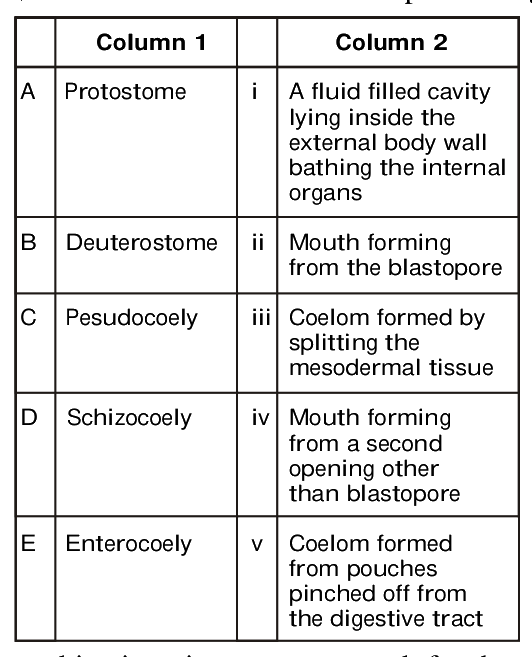
Four Cnidarians with the following characteristics were observed:
A. Asexual polyps and: sexual medusae; solitary or colonial; both freshwater and marine.
B. Polyp stage reduced or absent, medusae with velum; solitary; all marine.
C. Polyp stage reduced, bell shaped medusae; solitary; all marine.
D. All polyps, no medusae; solitary or colonial; all marine.
They can be identified to their respective classes:
a.
A - Scyphozoa, B - Anthozoa, C - Cubozoa, D - Hydrozoa
b.
A - Hydrozoa, B - Scyphozoa, C - Cubozoa, D - Anthozoa
c.
A - Anthozoa, B - Cubozoa, C - Hydrozoa, D - Scyphozoa
d.
A - Cubozoa, B - Scyphozoa, C - Anthozoa, D - Hydrozoa
Correct Answer & Step-by-Step Solution Locked
Sign in free to reveal the correct answer and AI explanation for this question.
The following table shows the summary of characters between two taxa based on presence (1) and absence (0) data
\begin{tabular}{|c|c|c|c|}
\hline
& \multicolumn{3}{c|}{Taxon A} \\
\hline
\multirow{3}{*}{Taxon B} & & 1 & 0 \\
\cline{2-4}
& 1 & 40 & 18 \\
\cline{2-4}
& 0 & 22 & 20 \\
\hline
\end{tabular}
Which of the following represents Jaccard's coefficient and Simple matching coefficient respectively?
a.
$0.8$, $0.5$
b.
$0.6$, $0.5$
c.
$0.8$, $0.6$
d.
$0.5$, $0.6$
Correct Answer & Step-by-Step Solution Locked
Sign in free to reveal the correct answer and AI explanation for this question.
Identify the proteobacteria based on the key given below:
\begin{tabular}{ll}
i. Cause disease in humans & (ii) \\
i. Do not cause disease in humans & (iii) \\
ii. An obligate intracellular parasite & (A) \\
ii. Not an obligate intracellular parasite & (B) \\
iii. Live in insects & (C) \\
iii. Do not live in insects & (iv) \\
iv. Chemoautotrophic & (D) \\
iv. Not Chemoautotrophic & (v) \\
v. Plant pathogen & (E) \\
v. Not a plant pathogen & (vi) \\
vi. Fix nitrogen & (vii) \\
vi. Do not fix nitrogen & (F) \\
vii. Associated with legumes & (G) \\
vii. Not associated with legumes & (H)
\end{tabular}
a.
A - \textit{Rickettsia}; B - \textit{Brucella}; C - \textit{Wolbachia}; D - \textit{Nitrobacter}; E - \textit{Agrobacterium}; F - \textit{Acetobacter}; G - \textit{Rhizobium}; H - \textit{Azospirillum}
b.
A - \textit{Rickettsia}; B - \textit{Wolbachia}; C - \textit{Brucella}; D - \textit{Nitrobacter}; E - \textit{Acetobacter}; F - \textit{Agrobacterium}; G - \textit{Rhizobium}; H - \textit{Azospirillum}
c.
A - \textit{Rickettsia}; B - \textit{Brucella}; C - \textit{Wolbachia}; D - \textit{Nitrobacter}; E - \textit{Agrobacterium}; F - \textit{Acetobacter}; G - \textit{Azospirillum}; H - \textit{Rhizobium}
d.
A - \textit{Rickettsia}; B - \textit{Brucella}; C - \textit{Wolbachia}; D - \textit{Nitrobacter}; E - \textit{Acetobacter}; F - \textit{Agrobacterium}; G - \textit{Azospirillum}; H - \textit{Rhizobium}.
Correct Answer & Step-by-Step Solution Locked
Sign in free to reveal the correct answer and AI explanation for this question.
Associate the forest/vegetation type with the plants:
a. Grass land
b. Subalpine forest
c. Shola forest
d. Subtropical pine forest
e. Tropical thorn forest
f. Tropical dry deciduous forest
g. Tropical semievergreen forest
h. Tropical wet evergreen forest
a.
a - Ilex, b - Dichanthium, c - Abies, d - Pinus, e - Acacia, f - Anogeissus, g - Cinnamomum, h - Dipterocarpus
b.
a - Dichanthium, b - Abies, c - Ilex, d - Pinus, e - Acacia, f - Anogeissus, g - Cinnamomum, h - Dipterocarpus
c.
a - Dichanthium, b - Abies, c - Ilex, d - Pinus, e - Dipterocarpus, f- Cinnamomum, g- Acacia, h - Anogeissus
d.
a - Anogeissus, b - Dichanthium, c - Ilex, d - Pinus, e - Acacia, f - Abies, g - Cinnamomum, h - Dipterocarpus
Correct Answer & Step-by-Step Solution Locked
Sign in free to reveal the correct answer and AI explanation for this question.
Possible explanations for the age related decline in primary productivity of trees are:
A. As trees grow larger with age, they have more tissues that respire and loose energy and proportionately less leaf area to photosynthesis.
B. Nutrient limitation by nitrogen due to reduced rate of woody litter decomposition as forest ages.
C. As trees become larger, water transport to the top canopy leaves becomes limited because of increased hydraulic resistance. This results in reduced stomatal conductance and reduction in photosynthetic rate.
Which of the above is/are correct?
a.
A, B and C
b.
only A
c.
only A and C
d.
only B and C
Correct Answer & Step-by-Step Solution Locked
Sign in free to reveal the correct answer and AI explanation for this question.
Species characteristics that make them more prone to extinction are listed below:
A. High degree of specialization
B. High sexual dimorphism
C. High trophic status
D. Short life span
Which of the following is the correct combination?
a.
A, B and C
b.
A, C and D
c.
A, B and D
d.
B, C and D
Correct Answer & Step-by-Step Solution Locked
Sign in free to reveal the correct answer and AI explanation for this question.
In a census for a lake fish, 10 individuals were marked and released. In second sampling after a few days 15 individuals were caught, of which 5 individuals were found marked. The estimated population of the fish in the lake will be
a.
20
b.
30
c.
25
d.
35
Correct Answer & Step-by-Step Solution Locked
Sign in free to reveal the correct answer and AI explanation for this question.
Identify the pollinators for the flowers with following pollination syndromes
A. Flowers dull colored, located away from foliage, floral parts turgid,
B. Flowers bright red, crowded, turgid, nectar watery and sucrose rich.
C Flowers white with pleasant odor, corolla tube long, night blooming.
a.
(A) Bird; (B) Bat; (C) Butterfly
b.
(A) Bat; (B) Bird; (C) Moth
c.
(A) Bat; (B) Bird; (C) Bee
d.
(A) Bird; (B) Bat; (C) Carrion fly
Correct Answer & Step-by-Step Solution Locked
Sign in free to reveal the correct answer and AI explanation for this question.
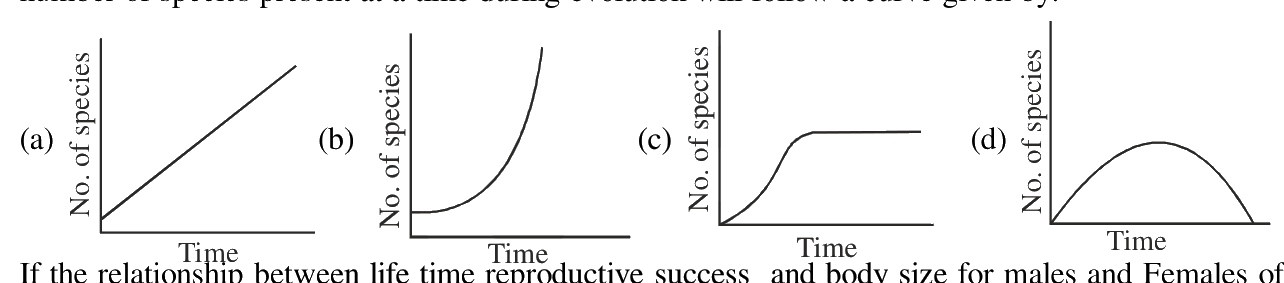
If the number of new species evolving is directly proportional to the number of existing species and the probability of extinction of any species is inversely proportional to the number of existing species, the number of species present at a time during evolution will follow a curve given by:
Correct Answer & Step-by-Step Solution Locked
Sign in free to reveal the correct answer and AI explanation for this question.
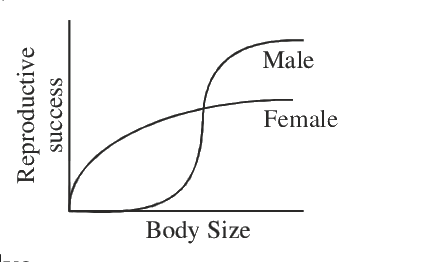
If the relationship between life time reproductive success and body size for males and Females of a species as shown in figure below:
The species is most likely to evolve
a.
sexual dimorphism
b.
asexual reproduction
c.
polyandry
d.
obligate monogamy
Correct Answer & Step-by-Step Solution Locked
Sign in free to reveal the correct answer and AI explanation for this question.
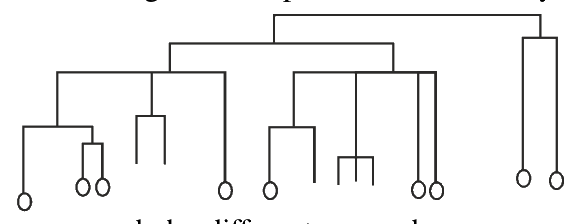
Following tree represents phylogenelic relationships among species of a moth family Circles represent species having eye spots on the wings. Other species do not have eye spots
The following inferences were made by different researchers:
A. Eye spots were present in the ancestors and some species lost them
B. Eye spots were not present in the ancestors.
C. Eye spots were lost more than once in evolution of the family
D. Eye spots were gained only once while evolving from ancestor without them.
Which of the inferences are correct?
a.
A and B
b.
C and D
c.
A and C
d.
B and D
Correct Answer & Step-by-Step Solution Locked
Sign in free to reveal the correct answer and AI explanation for this question.
\textit{Wolbachia} are obligate intracellular bacteria, many different strains of which are abundantly present in insects. They induce mating incompatibility in host, i.e. males infected with one strain can only fertilize females infected with the same strain. No other pathological effects are observed in host. A possible evolutionary consequence of this phenomenon would be:
a.
Extinction of many insect species.
b.
Termination of sexual reproduction in many insect species.
c.
Co-extinction of host and parasite.
d.
Reproductive isolation leading to rapid speciation in insects.
Correct Answer & Step-by-Step Solution Locked
Sign in free to reveal the correct answer and AI explanation for this question.
Twenty small populations of a species, each polymorphic for a given locus (T, t) were bred in captivity. In 10 of them the population size was kept constant by random removal of individuals, while other 10 were allowed to increase their population size. After several generations it was observed that in 7 of the size restricted populations only T was present, in the remaining 3 only t was observed. The experiment illustrates
a.
Genetic drift which is more likely in large populations,
b.
Genetic drift which is more likely in small populations.
c.
Density dependent selection against T.
d.
Density dependent selection against t.
Correct Answer & Step-by-Step Solution Locked
Sign in free to reveal the correct answer and AI explanation for this question.
Some important events in the history of life on Earth are given below.
A. First vertebrates (jawless fishes); first plants.
B. Forest of ferns and conifers; amphibians arise; insects radiate.
C. Conifers dominant; dinosaurs arise; insects radiate
D. Flowering plants appear; climax of dinosaurs followed by extinction.
E. Radiation of flowering plants, most modern mammalian orders represented,
F. Ice Ages, Modern humans appear
Match the above with the geological time periods and choose the correct combination,
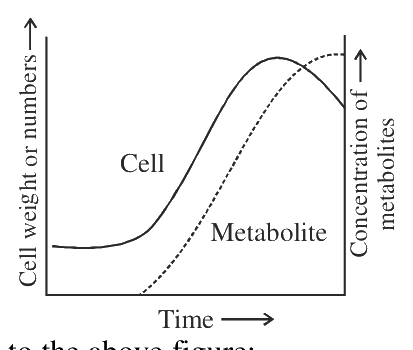
Microbes produce either primary or secondary metabolites during fermentation. A metabolite production curve is shown below:
The following statements refer to the above figure:
A. A primary metabolite has a production curve that lags behind the line showing cell growth.
B. A primary metabolite is produced after the Trophophase is completed.
C. A secondary metabolite is produced mainly during Idiophase.
D. The curve shows the production of Penicillin from mold.
Which of the above statements are correct?
a.
A and B
b.
C and D
c.
A and C
d.
B and D
Correct Answer & Step-by-Step Solution Locked
Sign in free to reveal the correct answer and AI explanation for this question.
During transgenesis, the location of the genes and their number integrated into the genome of the transgenic animal are random. It is often necessary to determine the copy number of genes and their tissue-specific transcription. The following are the possible methods used for the determination.
A. Polymerase Chain Reaction (PCR)
B. Southern blot hybridization
C. Reverse Transcriptase PCR
D. Western blot
Choose the correct set of combinations.
a.
A and B
b.
B and C
c.
B and D
d.
A and D
Correct Answer & Step-by-Step Solution Locked
Sign in free to reveal the correct answer and AI explanation for this question.
Agrobacterium tumefaciens, also known as natural genetic engineers, causes crown-gall disease in plants. However, when the same bacteria are used to raise transgenic plants with improved agronomic traits, no such tumor (disease) is observed. This is due to:
A. Vir D2 gene is mutated in Ti plasmid.
B. Disarmed Ti plasmid is generally used.
C. Heat-shock during transformation destroys virulence.
D. Oncogenes have been removed.
Which one of the following combination of above statements is correct?
a.
A and C
b.
A and D
c.
B and C
d.
B and D
Correct Answer & Step-by-Step Solution Locked
Sign in free to reveal the correct answer and AI explanation for this question.
Locus control region (LCR) lies far upstream from the gene cluster and is required for the appropriate expression of each gene in the cluster. LCR regulates expression of globin genes in the cluster through the following ways.
A. LCR interacts with promoters of individual genes by DNA looping through DNA-binding proteins.
B. The LCR-bound proteins attract chromatin-remodeling complexes including histone- modifying enzymes and components of the transcription machinery.
C. LCR acts as an enhancer for global regulation of gene cluster and does not regulate individual genes
D. LCR participates in covering inactive chromatin to active chromatin around the gene cluster.
Choose the correct set of combinations.
a.
A and B
b.
A and C
c.
B and C
d.
B and D
Correct Answer & Step-by-Step Solution Locked
Sign in free to reveal the correct answer and AI explanation for this question.
A student wrote following statements regarding comparison of Restriction Fragment Length polymorphism (RFLP), Random Amplified Polymorphic DNA(RAPD) Amplified fragment length Polymorphism (AFLP) and Simple Sequence Repeats (SSRs) techniques used for generating molecular markers in plants:
A. All these techniques can be used for fingerprinting.
B. Detection of allelic variation can be achieved only by RFLP and SSRs.
C. Use of radioisotopes is required in RFLP and RAPD only.
D. Polymerase chain reaction is required for all the techniques.
Which one of the following combination of above statements is correct?
a.
A and B
b.
B and C
c.
C and D
d.
D and A
Correct Answer & Step-by-Step Solution Locked
Sign in free to reveal the correct answer and AI explanation for this question.
In order to clone an eukaryotic gene in pBR322 plasmid vector, the desired DNA fragment was produced by Pst1 cleavage and incubated with Pst1 digested pBR322 (Pst1 cleavage site lies within the ampicillin resistant gene) and ligated. Mixtures of ligated cells were used to transform *E. coli* and plasmid containing bacteria were selected by their growth in tetracycline containing medium. Which type of plasmid/s will be found?
a.
Circular pBR322 plasmid containing the target gene and resistant to only tetracycline.
b.
Circular pBR322 plasmid containing the target gene and resistant to tetracycline only and re-circularized pBR322 plamid resistant to both ampicillin and tertracycline.
c.
Circular pBR322 plasmid containing the target gene and resistant to only teracycline, re-circularized pBR322 resistant to both ampicillin and tetracycline and concatemerised pBR322 resistant to both ampicillin and tetracycline.
d.
Circular pBR322 plasmid containing the target gene and resistant to both ampicillin and teracycline.
Correct Answer & Step-by-Step Solution Locked
Sign in free to reveal the correct answer and AI explanation for this question.
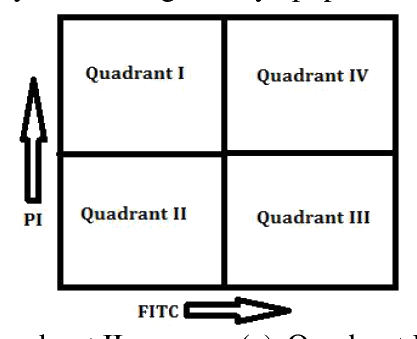
During apoptosis, phosphatidyl serine (PS) usually present in the inner leaflet of the plasma membrane flips to the outer membrane. Annexin V is a protein that binds to PS, Using this as a tool, we identifiy the apoptic cells from necrotic and normal cell populations by FACS using FITC-tagged Annexin V. Propidium iodide (PI) is used to stain the nucleus which generally identifies necrotic and late apoptic cells. In which area of the plot you should get early apoptic cells by FACS analysis?
a.
Quadrant I
b.
Quadrant II
c.
Quadrant III
d.
Quadrant IV
Correct Answer & Step-by-Step Solution Locked
Sign in free to reveal the correct answer and AI explanation for this question.
The muscle tone was increased after electrolytic lesion of the caudate nucleus in a cat. The muscle tone decreased within seven days. The following explanations were given by the researcher.
A. The functional recovery was due to plastic changes of nervous system.
B. The brain tissue surrounding the lesioned area was non-functional due to circulatory insufficiency immediately after surgery which led to the greater functional loss.
C. The circulatory status in surrounding tissue recovered with time resulting in partial functional recovery.
D. The degenerating nerve fibres were regenerated which underlie functional recovery.
Which one of the following is correct?
a.
A and B
b.
B and C
c.
C and D
d.
A and D
Correct Answer & Step-by-Step Solution Locked
Sign in free to reveal the correct answer and AI explanation for this question.
A fluorophore when transferred from solvent A to solvent B results in an increase in the number of vibrational states in the ground state without any change in the mean energies of either the ground or excited state. What would be the change seen in the fluorophore's emission spectrum?
a.
An increase in emission intensity.
b.
An increase in emission bandwidth,
c.
An increase in emission wavelength.
d.
A decrease in emission wavelength.
Correct Answer & Step-by-Step Solution Locked
Sign in free to reveal the correct answer and AI explanation for this question.
You wish to localize a given gene product at subcellular levels following immunofluorescence staining. Routine microscopy could not resolve whether the gene product is localized inside the nucleus or on the nuclear membrane. Which of the following will resolve this unambiguously?
A. Sectioning of cell followed by phase contrast microscopy.
B. A simulation of 3D picture following confocal microscopy.
C. Optical sectioning and observing each section.
D. Freeze fracturing followed by Scanning Electron Microscopy.
a.
A and B
b.
B and C
c.
C and D
d.
A and C
Correct Answer & Step-by-Step Solution Locked
Sign in free to reveal the correct answer and AI explanation for this question.
The Triver-Willard hypothesis states that the physiological state of a female can bias the sex ratio of offspring. In an experiment in the bird species a group of females were fed a diet 30% lower in calories than the control females. After allowing both the groups to mate and breed freely, the offspring of control 1 group were 22 males and 18 females. The diet restricted females laid a total of 40 eggs. What should be the minimum deviation from the control to conclude that they have significantly female biased offspring sex ratio. (Chi sq $[0.05]$ $\text{df} = 1$ is 3.84)
a.
18 male 22 female
b.
20 male 20 female
c.
15 male 25 female
d.
10 male 30 female
Correct Answer & Step-by-Step Solution Locked
Sign in free to reveal the correct answer and AI explanation for this question.