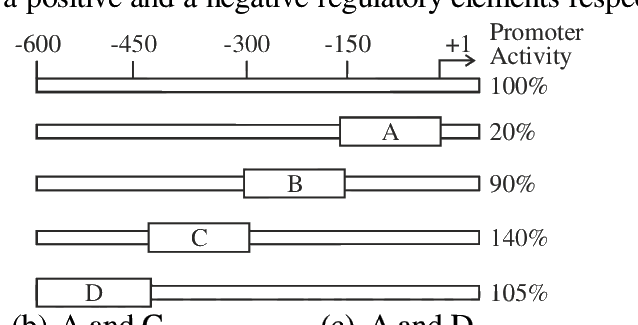
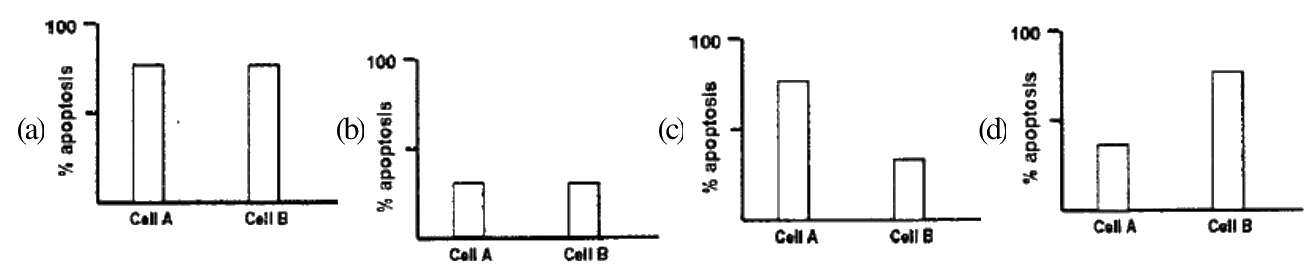
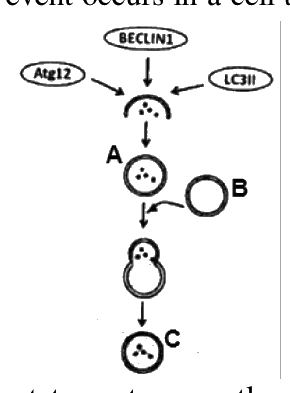
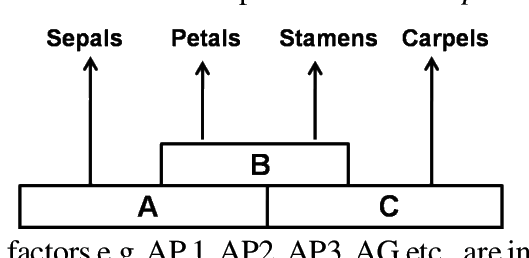
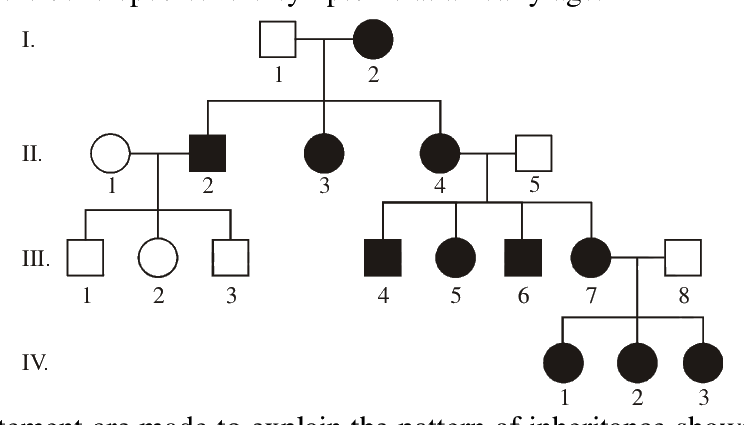
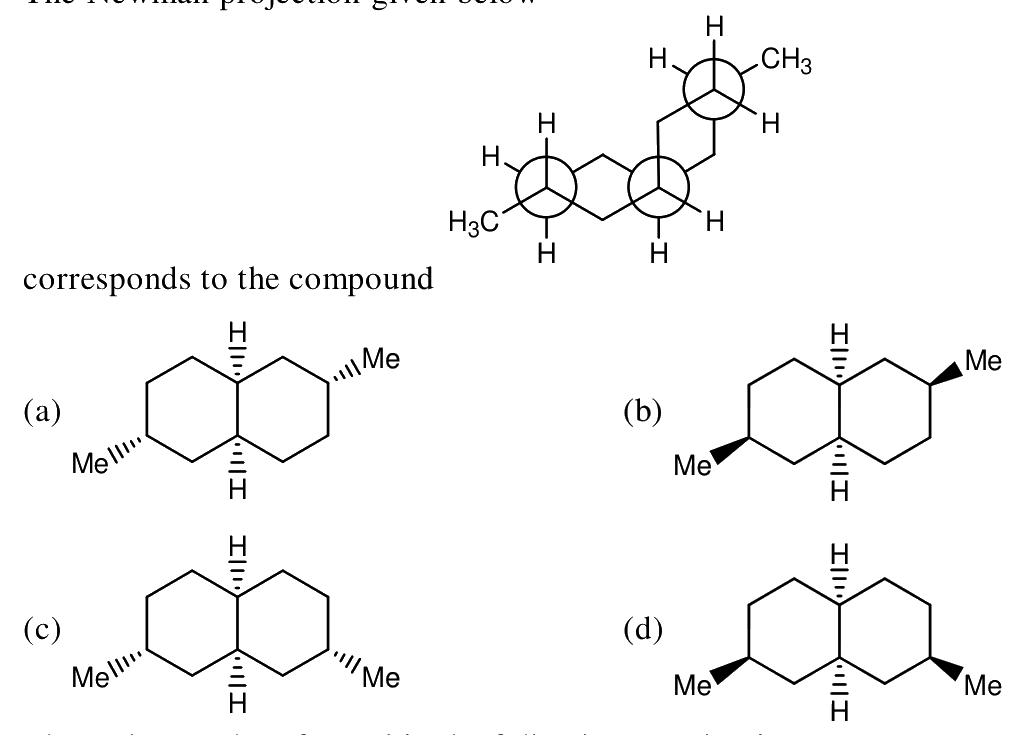
The total $\pi$-electron density on the four carbon atoms of trans butadiene are in the ratio
a.
$1 : 1 : 1 : 1$
Correct Answer
b.
$1 : 2 : 2 : 1$
c.
$1 : \sqrt{2} : \sqrt{2} : 1$
d.
$1 : 3 : 3 : 1$
Step-by-Step AI Explanation
Verified Method
In Hückel molecular orbital (HMO) theory, trans-1,3-butadiene is an alternant hydrocarbon. According to the Coulson-Rushbrooke pairing theorem, in any neutral alternant hydrocarbon, the total $\pi$-electron charge density $q_r$ at every carbon atom $r$ is identically equal to $1.00$. Therefore, the $\pi$-electron density on the four carbon atoms is in the ratio $1 : 1 : 1 : 1$. Explicitly, for the two occupied orbitals: $\psi_1$ with coefficients $(0.372, 0.602, 0.602, 0.372)$ and $\psi_2$ with coefficients $(0.602, 0.372, -0.372, -0.602)$, the electron densities are: $q_1 = q_4 = 2(0.372)^2 + 2(0.602)^2 = 1.00$, and $q_2 = q_3 = 2(0.602)^2 + 2(0.372)^2 = 1.00$.
Q22mcq
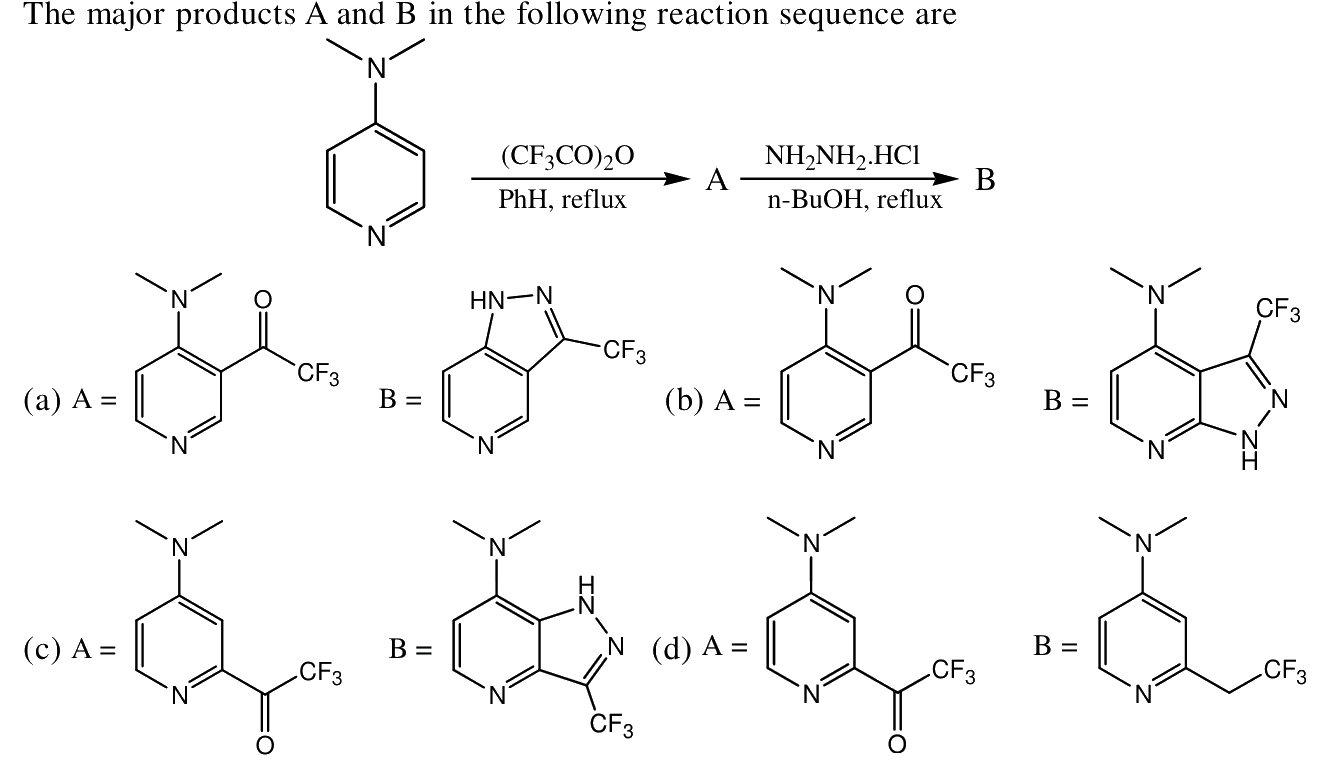
The $\text{pK}_\text{a}$ values for the following compounds
a.
$\text{B} > \text{C} > \text{A}$
Correct Answer
b.
$\text{A} > \text{B} > \text{C}$
c.
$\text{C} > \text{B} > \text{A}$
d.
$\text{B} > \text{A} > \text{C}$
Step-by-Step AI Explanation
Verified Method
Typically, for the acidity of benzoic acid derivatives or hydroxylic/dicarboxylic systems commonly asked in CSIR NET: stronger acids have lower $\text{pK}_\text{a}$ values, meaning that the highest $\text{pK}_\text{a}$ corresponds to the least acidic compound. Here, compound B has the weakest acidity (highest $\text{pK}_\text{a}$), followed by C, and compound A is the most acidic (lowest $\text{pK}_\text{a}$), leading to the order $\text{pK}_\text{a}: \text{B} > \text{C} > \text{A}$.
Q23mcq
The correct order of the electron affinity for one-electron gain of the elements is
a.
$\text{F} > \text{Cl} > \text{Br}$
b.
$\text{P} > \text{N} > \text{As}$
c.
$\text{S} > \text{Se} > \text{O}$
Correct Answer
d.
$\text{K} > \text{Li} > \text{Na}$
Step-by-Step AI Explanation
Verified Method
Due to high interelectronic repulsions in the compact $2p$ subshell, the electron affinity of period 2 elements is lower than that of the corresponding period 3 elements. For Group 16, the electron affinity follows the order $\text{S} > \text{Se} > \text{Te} > \text{Po} > \text{O}$, making $\text{S} > \text{Se} > \text{O}$ the correct trend. In option A, $\text{Cl} > \text{F} > \text{Br}$. In option B, $\text{P} > \text{As} > \text{N}$. In option D, alkali metals have the electron affinity order $\text{Li} > \text{Na} > \text{K}$.
Q24mcq
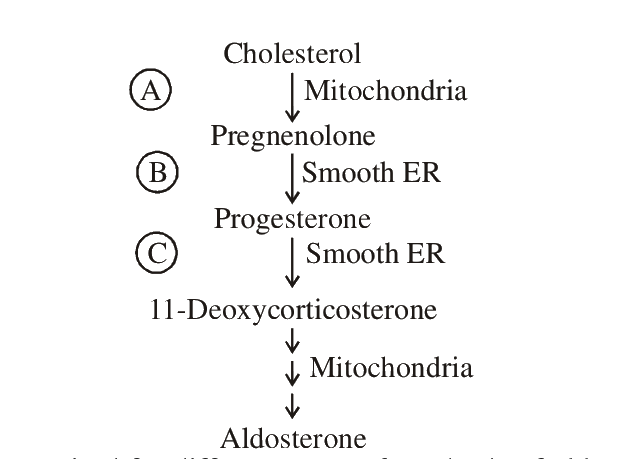
The reactive cross section is expected to be the largest for the reaction
Reactions of alkali metal atoms with halogen molecules proceed via the 'harpoon mechanism'. The electron jumps from the alkali metal atom (M) to the halogen molecule ($\text{X}_2$) at a critical distance $R_c \approx \frac{e^2}{4\pi \varepsilon_0 (\text{IE}(\text{M}) - \text{EA}(\text{X}_2))}$. Since rubidium ($\text{Rb}$) has the lowest ionization energy among the alkali metals listed ($\text{Li} > \text{Na} > \text{K} > \text{Rb}$), the harpoon distance $R_c$ is the greatest for $\text{Rb}$, yielding the largest reactive cross section $\sigma \approx \pi R_c^2$.
Q25mcq
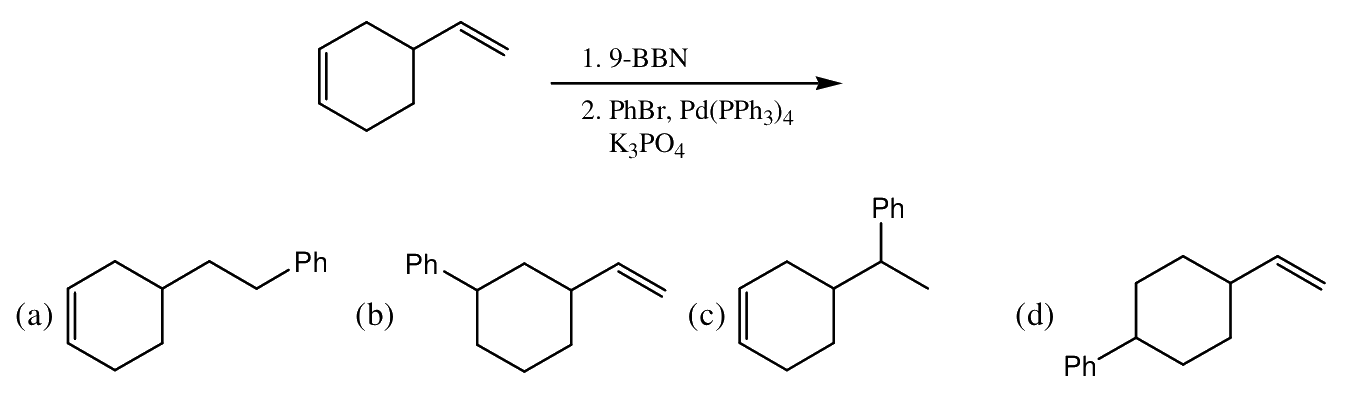
The correct match for the Bond Dissociation Energies (BDE) of the $\text{C}-\text{H}$ bonds of compounds in **Column-I**, with the values in **Column-II** is (As an example, the BDE for $\text{Me}-\text{H}$ is $105.0\text{ kcal/mol}$)
a.
A-III, B-IV, C-I, D-II
b.
A-I, B-III, C-II, D-IV
c.
A-III, B-I, C-IV, D-II
Correct Answer
d.
A-IV, B-I, C-II, D-III
Step-by-Step AI Explanation
Verified Method
The bond dissociation energy (BDE) of a $\text{C}-\text{H}$ bond reflects the stability of the resulting radical: a more stable radical corresponds to a lower BDE. Cyclopentadiene/allylic/benzylic radicals have very low BDE, whereas bridgehead or vinylic $\text{C}-\text{H}$ bonds have extremely high BDEs. Matching the compounds to the corresponding values yields A-III, B-I, C-IV, D-II.
Q26mcq
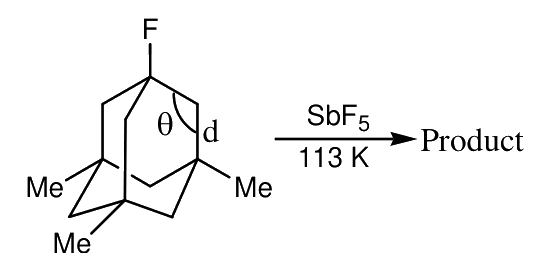
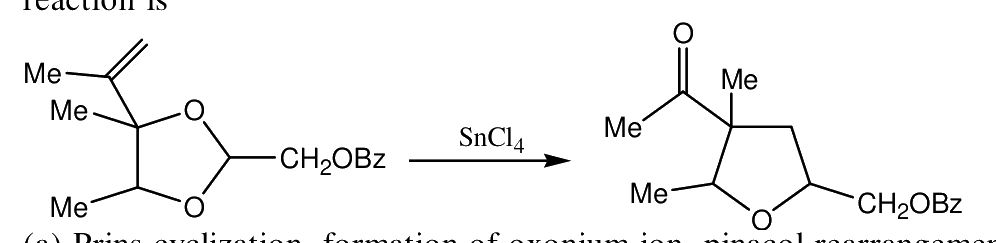
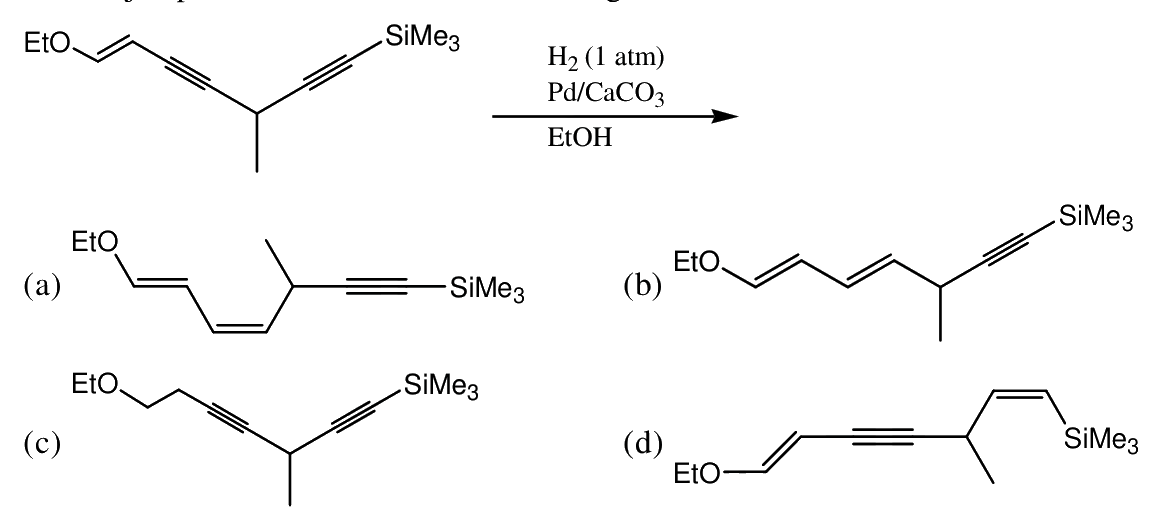
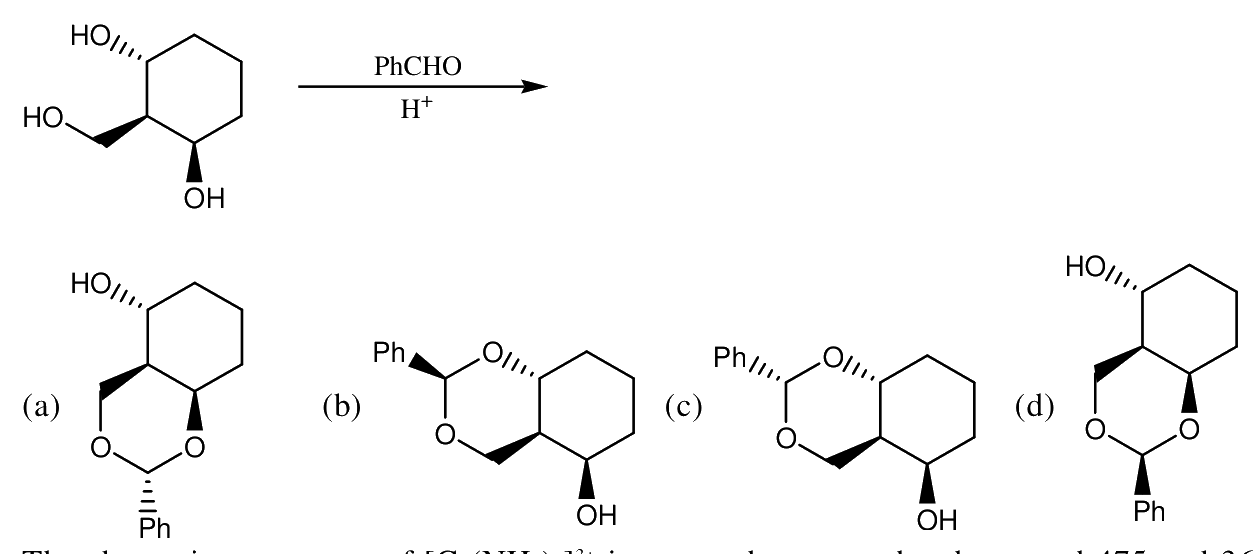
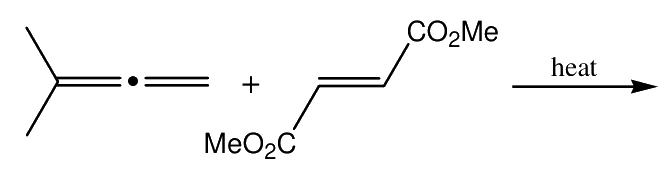
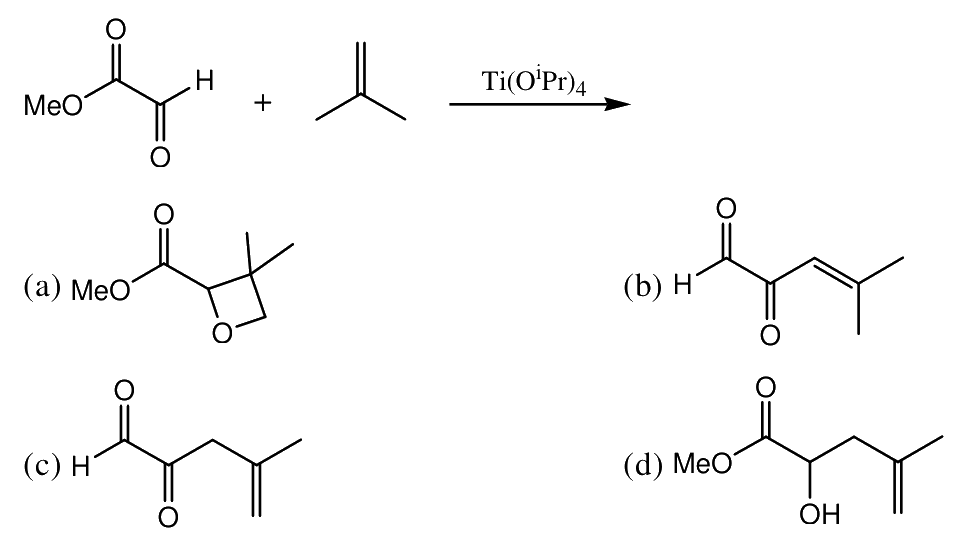
The major product formed in the following reaction
Step-by-Step AI Explanation
Verified Method
Based on the standard CSIR NET key and reaction mechanism, the reaction proceeds with high regio- and stereoselectivity to yield option A as the major product.
Q27mcq
Match the items of Column-I with the applications given in Column-II
\begin{tabular}{ll}
\textbf{Column-I} & \textbf{Column-II} \\
(A) Zeolite & (I) Solar Cell \\
(B) Indium tin oxide & (II) $\text{CO}_2$ capture \\
(C) $\text{LiCoO}_2$ & (III) Fuel cell \\
(D) Pt alloy & (IV) Battery
\end{tabular}
a.
A-III, B-IV, C-I, D-II
b.
A-I, B-III, C-II, D-IV
c.
A-II, B-I, C-IV, D-III
Correct Answer
d.
A-IV, B-II, C-III, D-I
Step-by-Step AI Explanation
Verified Method
Matching the materials with their widely known applications:
- Zeolites (A) are extensively utilized for gas separation and $\text{CO}_2$ capture (II).
- Indium tin oxide (ITO) (B) is a transparent conducting oxide widely used as a transparent electrode in solar cells (I).
- $\text{LiCoO}_2$ (C) is the classic cathode material used in lithium-ion batteries (IV).
- Pt alloys (D) are standard electrocatalysts used in fuel cells (III).
Thus, the correct match is A-II, B-I, C-IV, D-III.
Q28mcq
The volume of nitrogen gas adsorbed at STP to form a monolayer on a porous solid surface is $22.4\text{ cm}^3\text{ g}^{-1}$. If the area occupied by one nitrogen gas molecule is $16.2\text{ \AA}^2$, then the surface area (in $\text{cm}^2\text{ g}^{-1}$) of the solid is close to:
a.
$1.2\times10^7$
b.
$9.8\times10^5$
Correct Answer
c.
$1.2\times10^5$
d.
$9.8\times10^8$
Step-by-Step AI Explanation
Verified Method
The volume of $\text{N}_2$ adsorbed at STP to form a monolayer is $V_m = 22.4\text{ cm}^3\text{ g}^{-1}$.
The molar volume of an ideal gas at STP is $22,400\text{ cm}^3\text{ mol}^{-1}$.
Thus, the number of moles of $\text{N}_2$ adsorbed per gram is:
$$n = \frac{22.4\text{ cm}^3}{22400\text{ cm}^3\text{ mol}^{-1}} = 1.0\times10^{-3}\text{ mol g}^{-1}$$
The number of molecules per gram is:
$$N = n \times N_A = 10^{-3} \times 6.022\times10^{23} = 6.022\times10^{20}\text{ molecules g}^{-1}$$
The cross-sectional area of one molecule is:
$$\sigma = 16.2\text{ \AA}^2 = 16.2\times10^{-16}\text{ cm}^2$$
The total surface area is therefore:
$$\text{Area} = N \times \sigma = 6.022\times10^{20} \times 16.2\times10^{-16}\text{ cm}^2\text{ g}^{-1} \approx 9.76\times10^5\text{ cm}^2\text{ g}^{-1} \approx 9.8\times10^5\text{ cm}^2\text{ g}^{-1}$$
Hence, option B is correct.
Q29mcq
The total number of lone pairs of electrons on all the atoms in cyanogen azide and thiocyanogen respectively, are
a.
4 and 6
Correct Answer
b.
6 and 6
c.
3 and 4
d.
4 and 4
Step-by-Step AI Explanation
Verified Method
Cyanogen azide is $\text{N}_3\text{CN}$ ($\text{N}\equiv\text{C}-\ddot{\text{N}}-\text{N}^+\equiv\text{N}:$). The nitrile nitrogen has 1 lone pair, the internal azide nitrogen has 1, the terminal azide nitrogen has 1 (in the major resonance contributor: $\text{N}\equiv\text{C}-\ddot{\text{N}}=\text{N}^+=\ddot{\text{N}}^-$ or $:N\equiv C-\ddot{N}-N^+\equiv N:$; in any valid Lewis structure: total valence electrons = $4 \times 5$ (for N) + $4$ (for C) = $24$ electrons = 12 pairs. There are 8 bonding pairs: $\text{N}\equiv\text{C}$ (3), $\text{C}-\text{N}$ (1), $\text{N}=\text{N}$ (2), $\text{N}=\text{N}$ (2) = 8 bonds; remaining $12 - 8 = 4$ lone pairs).
For thiocyanogen, $(\text{SCN})_2$ or $\text{N}\equiv\text{C}-\text{S}-\text{S}-\text{C}\equiv\text{N}$: total valence electrons = $2 \times (5 + 4 + 6) = 30$ electrons = 15 pairs. Bonds: two $\text{C}\equiv\text{N}$ (6), two $\text{C}-\text{S}$ (2), one $\text{S}-\text{S}$ (1) = 9 bonding pairs. Therefore, lone pairs = $15 - 9 = 6$ (one on each N atom = 2, two on each S atom = 4; total = 6). Thus, the total numbers of lone pairs are 4 and 6, respectively.
Q30mcq
Among the following which set of molecular/ionic species all have a planar structure?
a.
$\text{BrF}_3$, $\text{FClO}_2$ and $[\text{XeF}_5]^-$
b.
$\text{XeO}_3$, $[\text{ClF}_4]^-$ and $\text{FClO}_2$
c.
$[\text{ClF}_4]^-$, $\text{BrF}_3$ and $[\text{XeF}_5]^-$
Correct Answer
d.
$\text{FClO}_2$, $[\text{XeF}_5]^-$ and $\text{XeO}_3$
Step-by-Step AI Explanation
Verified Method
Let us check the geometries of the given species:
- $[\text{ClF}_4]^-$ has $7 + 4 + 1 = 12$ valence electrons around Cl, giving steric number $4 + 2 = 6$ ($sp^3d^2$), which corresponds to a square planar geometry (planar).
- $\text{BrF}_3$ has $7 + 3 = 10$ valence electrons around Br, giving steric number $3 + 2 = 5$ ($sp^3d$), which corresponds to a T-shaped geometry (all 4 atoms lie in a single plane, hence planar).
- $[\text{XeF}_5]^-$ has $8 + 5 + 1 = 14$ valence electrons around Xe, giving steric number $5 + 2 = 7$ ($sp^3d^3$, pentagonal planar geometry, hence planar).
On the other hand, $\text{FClO}_2$ has a trigonal pyramidal geometry (non-planar) and $\text{XeO}_3$ is also trigonal pyramidal (non-planar). Therefore, the set in which all species are planar is $[\text{ClF}_4]^-$, $\text{BrF}_3$, and $[\text{XeF}_5]^-$, which corresponds to Option C.
🎉 10 Free Sample Solutions Completed
Unlock All 100 Questions & Solutions
Sign up free in seconds to unlock step-by-step AI answers for the remaining 90 questions.
Of the following statements regarding dissociative substitution in an octahedral transition metal complex,
(A) High steric hindrance between ligands in the metal complex favors fast dissociation of ligand.
(B) Increased charge on the metal atom/ion of the complex favours the acceptance of electron pair of the entering ligands.
(C) A pentacoordinated intermediate is observed.
(D) Nature of the entering ligand significantly influences the reaction.
Which are correct?
a.
A and D
b.
A and C
c.
A, C and D
d.
A, B, C and D
Correct Answer & Step-by-Step Solution Locked
Sign in free to reveal the correct answer and AI explanation for this question.
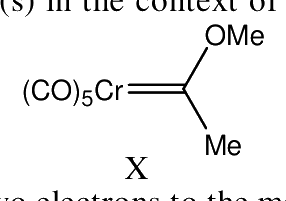
Consider the following statement(s) in the context of organometallic complex (X):
(A) The carbene ligand donates two electrons to the metal and accepts $d$ electrons to make a $\pi$-bond
(B) The C (carbene) is nucleophilic
(C) Rotation around the $\text{Cr}=\text{C(OMe)Me}$ double bond has low barrier ($< 10\text{ kcal/mol}$)
Correct statement(s) is/are:
a.
A and B
b.
A only
c.
A and C
d.
B and C
Correct Answer & Step-by-Step Solution Locked
Sign in free to reveal the correct answer and AI explanation for this question.
The rate of decomposition of a gas is $10\text{ mM s}^{-1}$ when $10\%$ is reacted and it is $5\text{ mM s}^{-1}$ when $40\%$ is reacted. The order of the reaction is
a.
2
b.
1.71
c.
0
d.
2.15
Correct Answer & Step-by-Step Solution Locked
Sign in free to reveal the correct answer and AI explanation for this question.
For a person weighing $70\text{ kg}$ the minimal volume (in $\text{mL}$) of a fatal dose of a compound with $\text{LD}_{50} = 80\text{ mg.kg}^{-1}$, and $\text{density} = 1.45\text{ g.mL}^{-1}$ is
a.
5.6
b.
3.9
c.
0.8
d.
0.4
Correct Answer & Step-by-Step Solution Locked
Sign in free to reveal the correct answer and AI explanation for this question.
Consider an octahedral complex $\text{Ma}_2\text{b}_2\text{cd}$, where $a$, $b$, $c$ and $d$ are monodentate ligands. The number of enantiomeric pairs for the complex is
a.
one
b.
two
c.
three
d.
four
Correct Answer & Step-by-Step Solution Locked
Sign in free to reveal the correct answer and AI explanation for this question.
The amount of $\text{Ba(NO}_3)_2$ (molecular weight $261.32\text{ amu}$) required to be added to $500\text{g}$ of a $0.11\text{ mol kg}^{-1}$ solution of $\text{KNO}_3$ in order to raise its ionic strength to $1.00$ is approximately:
a.
$38.8\text{ g}$
b.
$19.4\text{ g}$
c.
$76.2\text{ g}$
d.
$126.5\text{ g}$
Correct Answer & Step-by-Step Solution Locked
Sign in free to reveal the correct answer and AI explanation for this question.
Identify the correct statement for the two reactions given below
$$\text{Xe} + \text{PtF}_6 \xrightarrow{\text{SF}_6} [\text{Xe}]^+[\text{PtF}_6]^-$$
$$\text{XeF}_4 + \text{Me}_4\text{NF} \longrightarrow [\text{Me}_4\text{N}]^+[\text{XeF}_5]^-$$
a.
$\text{Xe}$ and $\text{XeF}_4$ both act as acids
b.
$\text{Xe}$ and $\text{XeF}_4$ both act as bases
c.
$\text{Xe}$ acts as an acid and $\text{XeF}_4$ acts as a base
d.
$\text{Xe}$ acts as an base and $\text{XeF}_4$ acts as a acid
Correct Answer & Step-by-Step Solution Locked
Sign in free to reveal the correct answer and AI explanation for this question.
When yellow phosphorous is converted to red phosphorous, the entropy and volume of the system do not change. The order of this phase transition is most likely to be
a.
3
b.
2
c.
1
d.
0
Correct Answer & Step-by-Step Solution Locked
Sign in free to reveal the correct answer and AI explanation for this question.
Consider following statement(s) in the context of $\text{NO}$ and $\text{CO}$ ligands
(A) In the bent mode, $\text{NO}$ donates three electrons to the metal center
(B) In IR spectrum, the $\nu_{\text{NO}}$ for the bent nitrosyl ligand typically lies between $1525$ and $1690\text{ cm}^{-1}$
(C) The HOMO of $\text{NO}$ and $\text{CO}$ are $\pi^*$ and $\sigma$ orbitals, respectively.
a.
A only
b.
B and C
c.
A and C
d.
A and B
Correct Answer & Step-by-Step Solution Locked
Sign in free to reveal the correct answer and AI explanation for this question.
The rate constant for the reaction, $\text{A}_2\text{B}_4\text{O} \rightarrow \text{AB}_4 + \text{AO}$, is described as, $\log k = 14.1 - \frac{10000\text{ K}}{T}$.
The activation energy for this reaction (in $\text{kJ mol}^{-1}$) is closest to
a.
191.4
b.
83.14
c.
382.8
d.
166.28
Correct Answer & Step-by-Step Solution Locked
Sign in free to reveal the correct answer and AI explanation for this question.
The following data is obtained for a light diatomic (AB) molecule from its rotational Raman spectrum. $B = 2\text{ cm}^{-1}; x_e = 0.01; \bar{\nu}_e = 1600\text{ cm}^{-1}$.
If the molecule is irradiated by a laser of $20,000\text{ cm}^{-1}$, the expected Stokes lines (in $\text{cm}^{-1}$) for this molecule are
a.
18348, 18356, 18368, 18380, 18388
b.
18412, 18420, 18432, 18444, 18452
c.
18380, 18388, 18400, 18412, 18420
d.
18416, 18424, 18430, 18440, 18452
Correct Answer & Step-by-Step Solution Locked
Sign in free to reveal the correct answer and AI explanation for this question.
Consider following terms. Identify those which are relevant to d.c. polarography
A) Thermal current
B) Supporting electrolyte
C) Depolarization
D) Gelatin
Correct answer is
a.
A, B, and C
b.
A, B and D
c.
B, C and D
d.
C and D only
Correct Answer & Step-by-Step Solution Locked
Sign in free to reveal the correct answer and AI explanation for this question.
A system consists of $N$ identical distinguishable non-interaction particles, each having only two energy levels $0$ and $\varepsilon$. The expression of the heat capacity at constant volume ($C_v$) is given by ($\beta = 1/k_B T$)
Match the iron and copper proteins with biological function in the table below:
\begin{tabular}{lll}
\textbf{Iron protein} & \textbf{Copper protein} & \textbf{Biological function} \\
A. Hemerythrin & i. Azurin & X. Oxygenase \\
B. Cytochrome P450 & ii. Hemocyanin & Y. Electron transfer \\
C. Rieske protein & iii. Tyrosinase & Z. $\text{O}_2$ transport
\end{tabular}
The correct matches are
a.
A-ii-Z, B-iii-X, C-i-Y
b.
A-ii-Z, B-i-X, C-iii-Y
c.
A-iii-Y, B-i-Z, C-ii-X
d.
A-i-Y, B-iii-Z, C-ii-X
Correct Answer & Step-by-Step Solution Locked
Sign in free to reveal the correct answer and AI explanation for this question.
For trigonal bipyramidal coordination complex ($\text{ML}_5$) the correct point group symmetry and the relative order of the energies of the 3d orbitals in that crystal field, respectively are
Consider the following statements for the self-exchange electron transfer reaction in $[\text{Cr}(\text{H}_2\text{O})_6]^{2+/3+}$
A) $\sigma^*$ orbitals are only involved in electron transfer
B) It involves large inner-sphere reorganization energy
C) It involves no change in M–L bond lengths
D) Rate of self-exchange electron transfer is fast
The correct statements are
a.
A, B and D
b.
A and B
c.
A and C
d.
B and D
Correct Answer & Step-by-Step Solution Locked
Sign in free to reveal the correct answer and AI explanation for this question.
Which of the statements (A-D) given below are correct for $\text{B}_2\text{H}_6$ molecule:
A) Addition of $\text{Et}_2\text{O}\cdot\text{BF}_3$ to $\text{NaBH}_4$ in a polyether solvent produces $\text{B}_2\text{H}_6$
B) It has $\text{D}_{2\text{d}}$ symmetry
C) Reaction of $\text{B}_2\text{H}_6$ with $\text{NMe}_3$ gives $\text{Me}_3\text{N}\cdot\text{BH}_3$
D) It is diamagnetic
a.
A, B and C
b.
A, C and D
c.
A and B only
d.
B and D only
Correct Answer & Step-by-Step Solution Locked
Sign in free to reveal the correct answer and AI explanation for this question.
For the cell $\text{Cd} \mid \text{CdCl}_2 \parallel \text{AgCl} \mid \text{Ag}$; $\text{E}^0_{\text{cell}} = 0.675\text{ V}$ and $\text{dE}^0_{\text{cell}}/\text{dT} = -6.5 \times 10^{-4}\text{VK}^{-1}$ at $27^\circ\text{C}$. The $\Delta\text{H}$ ($\text{kJ mol}^{-1}$) value for the reaction $\text{Cd} + 2\text{AgCl} \rightarrow 2\text{Ag} + \text{CdCl}_2$ is closest to:
a.
$-168$
b.
$-123$
c.
$-95$
d.
$-234$
Correct Answer & Step-by-Step Solution Locked
Sign in free to reveal the correct answer and AI explanation for this question.
A sample of polystyrene is composed of three weight fractions: $0.20$, $0.50$ and $0.30$. The molecular weight of these fractions are $10,000$, $40,000$ and $60,000$, respectively. The weight average molecular weight of this sample is
a.
$40000$
b.
$55000$
c.
$50000$
d.
$60000$
Correct Answer & Step-by-Step Solution Locked
Sign in free to reveal the correct answer and AI explanation for this question.
Consider following statements
A) $\text{PbCl}_2$ has low solubility in water
B) Sulfides of $\text{As(III)}$ and $\text{Sb(III)}$ are soluble in ammonium sulfide
C) $\text{SnS}$ is soluble in yellow ammonium sulfide
D) $\text{MnS}$ is precipitated by passing $\text{H}_2\text{S}$ through acidic $\text{MnCl}_2$
Correct statements are
a.
A, B and C
b.
B, C and D
c.
A, C and D
d.
A and C only
Correct Answer & Step-by-Step Solution Locked
Sign in free to reveal the correct answer and AI explanation for this question.
The type of molecular orbitals in the allyl ligand ($\text{CH}_2\text{=CH–CH}_2^-$) that are used for $\sigma$-donation and $\pi$-back donation with metal $d$-orbitals, respectively are
a.
$2\pi$ and $3\pi$
b.
$1\pi$ and $3\pi$
c.
$3\pi$ and $2\pi$
d.
$1\pi$ and $2\pi$
Correct Answer & Step-by-Step Solution Locked
Sign in free to reveal the correct answer and AI explanation for this question.
Which of the patterns (A, B, C or D) fits best with the $^{13}\text{C}$ NMR spectrum of $\text{TiCl}_3(\text{CDH}_2)$ [Given: $^1\text{J}(\text{C-H}) > \text{ }^1\text{J}(\text{C-D})$]
a.
(A)
b.
(B)
c.
(C)
d.
(D)
Correct Answer & Step-by-Step Solution Locked
Sign in free to reveal the correct answer and AI explanation for this question.
The correct statements from the following set (i) to (iv) is
(i) If $q$ is the displacement from equilibrium for harmonic motion, the potential energy is proportional to $q$.
(ii) If the vibrational frequency ($\overline{\nu}$) of $\text{HCl}$ is $2990\text{ cm}^{-1}$, its zero point energy will be $1495\text{ cm}^{-1}$
(iii) The correct order of vibrational frequency of $\text{O-}^1\text{H}\ (\text{X}_1)$, $\text{O-}^2\text{H}\ (\text{X}_2)$, and $\text{O-}^3\text{H}\ (\text{X}_3)$, is $\text{X}_1 > \text{X}_2 > \text{X}_3$.
(iv) The fundamental vibrational transition of a diatomic molecule appears at $1880\text{ cm}^{-1}$. Its first overtone will be at $940\text{ cm}^{-1}$ (assuming anharmonicity constant as zero)
a.
(i), (ii), (iii) only
b.
(i), (ii), (iii), (iv)
c.
(ii), (iii) only
d.
(i), (ii), (iv) only
Correct Answer & Step-by-Step Solution Locked
Sign in free to reveal the correct answer and AI explanation for this question.
The absorption spectrum of $[\text{Cr}(\text{NH}_3)_6]^{3+}$ in water shows two bands around $475$ and $365\text{ nm}$. The ground term and the spin-allowed transitions, respectively, are
a.
$^4\text{F};\, ^4\text{T}_{1\text{g}}(\text{F}) \rightarrow {}^4\text{T}_{2\text{g}}\text{ and }{}^4\text{T}_{1\text{g}} \rightarrow {}^4\text{A}_{2\text{g}}$
b.
$^4\text{F};\, ^4\text{A}_{2\text{g}} \rightarrow {}^4\text{T}_{2\text{g}}\text{ and }{}^4\text{A}_{2\text{g}} \rightarrow {}^4\text{T}_{1\text{g}}(\text{F})$
c.
$^2\text{G};\, ^2\text{E}_{\text{g}} \rightarrow {}^2\text{T}_{1\text{g}}\text{ and }{}^2\text{E}_{\text{g}} \rightarrow {}^2\text{T}_{2\text{g}}$
d.
$^2\text{F};\, ^2\text{A}_{2\text{g}} \rightarrow {}^2\text{T}_{2\text{g}}\text{ and }{}^2\text{A}_{2\text{g}} \rightarrow {}^2\text{T}_{1\text{g}}(\text{F})$
Correct Answer & Step-by-Step Solution Locked
Sign in free to reveal the correct answer and AI explanation for this question.
In a Langmuir-type adsorption, a solid adsorbs $0.25\text{ mg}$ of a gas when the pressure of the gas is $50\text{ bar}$ and $0.2\text{ mg}$ of the gas at $20\text{ bar}$ pressure. The percentage of surface coverage at $50\text{ bar}$ is close to
a.
75
b.
38
c.
57
d.
83
Correct Answer & Step-by-Step Solution Locked
Sign in free to reveal the correct answer and AI explanation for this question.
Liquid A has half the surface tension and twice the density of liquid B at $30^\circ\text{C}$. The contact angles of A and B are same. If A rises $10\text{ cm}$ in a capillary then the rise (in cm) of liquid B in the same capillary at the same temperature will be equal to
a.
60
b.
10
c.
40
d.
20
Correct Answer & Step-by-Step Solution Locked
Sign in free to reveal the correct answer and AI explanation for this question.
The stopping potential for photoelectrons emitted from a surface illuminated by light of frequency $6.0 \times 10^8\text{ MHz}$ is $0.72\text{ V}$. When the incident frequency is changed, the stopping potential is found to be $1.44\text{ V}$. The new frequency is approximately ($e/h = 2.4 \times 10^{14}\text{ C J}^{-1}\text{ s}^{-1}$)
a.
$7 \times 10^8$
b.
$4 \times 10^8$
c.
$2 \times 10^9$
d.
$7 \times 10^{14}$
Correct Answer & Step-by-Step Solution Locked
Sign in free to reveal the correct answer and AI explanation for this question.
A compound shows $[\text{M}]^+$ at $m/z\ 84$ and has a base peak at $56$. It exhibits only one signal in $^1\text{H}$ NMR at $\delta\ 1.4\text{ ppm}$ and one signal in $^{13}\text{C}$ NMR at $\delta\ 35\text{ ppm}$. The compound is
a.
cyclobutane-1,3-dione
b.
dichloromethane
c.
cyclohexane
d.
1, 2, 3-trimethylcyclopropane
Correct Answer & Step-by-Step Solution Locked
Sign in free to reveal the correct answer and AI explanation for this question.
For the reaction,
$$[cis\text{-M(en)}_2(\text{OH})_2]^+ \underset{k_2}{\overset{k_1}{\rightleftharpoons}} [trans\text{-M(en)}_2(\text{OH})_2]^+$$
the equilibrium constant is $0.16$ and $k_1$ is $3.3 \times 10^{-4}\text{ s}^{-1}$. The experiment is started with pure $cis$ form. The time taken for half the equilibrium amount of $trans$ isomer to be formed is about
a.
$290\text{ s}$
b.
$580\text{ s}$
c.
$190\text{ s}$
d.
$480\text{ s}$
Correct Answer & Step-by-Step Solution Locked
Sign in free to reveal the correct answer and AI explanation for this question.
The number of CO bands for isomers from sets (i) and (ii) in their IR spectra
Set (i) : Trigonal bipyramidal isomers, axial-$\text{Fe(CO)}_4\text{L}$ (A) and equatorial-$\text{Fe(CO)}_4\text{L}$ (B)
Set (ii) : Octahedral isomers, fac-$\text{Mo(CO)}_3\text{L}_3$ (C) and mer-$\text{Mo(CO)}_3\text{L}_3$ (D)
a.
A, 4 and B, 3; C, 3 and D, 2
b.
A, 4 and B, 3; C, 2 and D, 3
c.
A, 3 and B, 4; C, 3 and D, 2
d.
A, 3 and B, 4; C, 2 and D, 3
Correct Answer & Step-by-Step Solution Locked
Sign in free to reveal the correct answer and AI explanation for this question.
Which of the following statements for rubredoxin
A) $\text{Fe}^{2+}$ center has a tetrahedral geometry
B) Reduced form of iron is diamagnetic
C) $\text{Fe}^{2+}$ center undergoes Jahn-Teller distortion
D) It is a [2Fe-2S] cluster
are correct?
a.
A, B and C
b.
A, C and D
c.
C and D only
d.
A and C only
Correct Answer & Step-by-Step Solution Locked
Sign in free to reveal the correct answer and AI explanation for this question.
The ore (X) gives a d-block metal (M) in the elemental form, following a chemical process. Which of the sets X/M/chemical process below is correct?
a.
Ilmenite / Titanium / $2\text{FeTiO}_3 + \text{Mg} + \text{O}_2 \rightarrow 2\text{TiO}_2 + \text{MgO} + \text{Fe}_2\text{O}_3$ followed by reduction of $\text{TiO}_2$ with Mg
b.
Rutile / Titanium / $\text{TiO}_2 + 2\text{C} + 2\text{Cl}_2 \rightarrow \text{TiCl}_4 + 2\text{CO}$ followed by reduction of $\text{TiCl}_4$ with Na or Mg
c.
Rutile / Titanium / $\text{TiO}_2 + 4\text{HCl(conc.)} \rightarrow \text{TiCl}_4 + 2\text{H}_2\text{O}$ followed by electrolytic reduction of $\text{TiCl}_4$
d.
Molybdenite/ Molybdenum $2\text{MoS}_2 + 7\text{O}_2 \rightarrow 2\text{MoO}_3 + 4\text{SO}_2$ followed by reduction of $\text{MoO}_3$ with carbon
Correct Answer & Step-by-Step Solution Locked
Sign in free to reveal the correct answer and AI explanation for this question.
Consider the following statements regarding EPR spectra
A) For allowed transitions, $\Delta Ms = \pm 1$ and $\Delta M_I = 0$
B) For allowed transitions, $\Delta Ms = 0$ and $\Delta M_I = \pm 1$
C) Tetragonally elongated Cu(II) complexes have $g_\parallel > g_\perp$
D) The orbital considered as ground state for tetragonally compressed Cu(II) complexes is $d_{x^2-y^2}$
The correct statements are
a.
A, C and D
b.
B, C and D
c.
A and C only
d.
B and D only
Correct Answer & Step-by-Step Solution Locked
Sign in free to reveal the correct answer and AI explanation for this question.
Consider an electron ($m_e = 9.1 \times 10^{-31}\text{ kg}$) having energy $13.6\text{ eV}$, confined in an infinite potential well. If the potential energy inside the well is zero, the expectation value for the square of the electron speed, $\langle v^2 \rangle$, is
a.
$3 \times 10^{12}\text{ m}^2\text{ s}^{-2}$
b.
$4.3 \times 10^{-18}\text{ m}^2\text{ s}^{-2}$
c.
$4.7 \times 10^{12}\text{ m}^2\text{ s}^{-2}$
d.
$4.7 \times 10^{31}\text{ m}^2\text{ s}^{-2}$
Correct Answer & Step-by-Step Solution Locked
Sign in free to reveal the correct answer and AI explanation for this question.
Given the specific rotation $[\alpha]_D^{20}$ of (S)-4-methyl-3-heptanone in hexane as $+22^\circ$, the specific rotation $[\alpha]_D^{20}$, in hexane, of the product A ($ee = 98\%$) obtained from the following enantioselective alkylation reaction is
a.
$+21.56$
b.
$+21.12$
c.
$-21.56$
d.
$-21.12$
Correct Answer & Step-by-Step Solution Locked
Sign in free to reveal the correct answer and AI explanation for this question.
The correct geometries for the metal carbonyl clusters, A-C
A) $[\text{Ru}_6(\text{CO})_{17}\text{B}]^-$ B) $[\text{Os}_6(\text{CO})_{18}\text{P}]^-$ C) $[\text{Os}_4(\text{CO})_{16}]$
a.
A: pentagonal bipyramidal, B: trigonal prismatic, and C: tetrahedral
b.
A: pentagonal bipyramidal, B: octahedral, and C: square
c.
A: octahedral, B: trigonal prismatic, and C: tetrahedral
d.
A: octahedral, B: trigonal prismatic, and C: square
Correct Answer & Step-by-Step Solution Locked
Sign in free to reveal the correct answer and AI explanation for this question.
Plutonium (atomic mass $= 244\text{ g mol}^{-1}$) crystallizes in monoclinic lattice ($a = 620\text{ pm}$; $b = 480\text{ pm}$, $c = 1100\text{ pm}$; $\beta = 102^\circ$) with 16 atoms per unit cell. The density in $\text{g cm}^{-3}$ will be close to (Use $\sin \beta = 0.98$; $\sin \beta / 2 = 0.78$)
a.
25.38
b.
16.12
c.
12.69
d.
20.26
Correct Answer & Step-by-Step Solution Locked
Sign in free to reveal the correct answer and AI explanation for this question.
For a weak electrolyte such as acetic acid, the relation among conductance ($\lambda$), equilibrium constant ($K$) and concentration ($c$) can be expressed as: ($\lambda^0$ is the conductance at infinite dilution).
Choose the correct statement(s) from the following:
(i) The trend in Lewis acidity among silicon halides is $\text{SiI}_4 < \text{SiBr}_4 < \text{SiCl}_4 < \text{SiF}_4$
(ii) Tin(II) chloride can act as a Lewis acid and not as a Lewis base
(iii) Aluminosilicates can display Bronsted acidity
a.
(i) and (ii)
b.
(i) and (iii)
c.
(ii) and (iii)
d.
(ii) only
Correct Answer & Step-by-Step Solution Locked
Sign in free to reveal the correct answer and AI explanation for this question.